
Our Testing Solutions for Media-Carrying Components – Alternative Fuels

Alternative fuels such as hydrogen, methanol, and ammonia place new demands on injection systems and components. Our test benches help you to reliably develop and validate these systems under realistic conditions.
The use of alternative fuels is becoming increasingly important across many industries. Hydrogen, methanol, and ammonia are considered promising energy carriers for future drive and energy systems.
However, these new media also place higher demands on the development, validation, and safeguarding of components. Injection systems, valves, and other fuel-carrying components must operate reliably under realistic operating conditions.
Sonplas develops test benches and testing systems for alternative fuels, enabling precise characterization, functional testing, and durability testing of components. Our solutions support you in safely and efficiently integrating new fuels into existing and future drive systems.
Test benches for alternative fuels such as hydrogen, methanol and ammonia
Test systems for injectors, valves and injection systems
functional and durability testing under realistic operating conditions
Characterization of injection systems and valve components
Solutions for stationary and maritime applications
Scalable test systems for development, validation and series production

Already interested?
Werner Riederer: “Let’s talk about your project!”
Contact us without obligation and tell us about your requirements. Together, we will develop the right solution—technically sound and precisely tailored to your needs.
Contact us!
Why Sonplas
is your ideal partner for alternative fuels
Realistic testing for reliable development decisions
Our test benches simulate real operating conditions for hydrogen, methanol, and ammonia systems. This allows you to verify at an early stage whether your injectors and valves will perform reliably in operation.
Precise characterization of your components
With our test systems, you can analyze key properties such as valve characteristics, switching times, flow rates, and leak tightness. This provides you with reliable data for the targeted optimization of your components.
Early identification of optimization potential
Through functional, endurance, and lifetime testing, potential issues can be identified already during the development phase. This reduces later failures and increases the reliability of your systems.
Efficient development for new energy carriers
Our test benches are specifically designed for alternative fuels such as hydrogen, methanol, and ammonia. This enables you to validate new technologies more quickly and integrate them safely into your applications.
Scalable test solutions from development to series production
Our test systems can be used flexibly—from component development and validation through to series production testing. This allows your testing capacity to grow in line with your project.
Automated testing processes for reproducible results
A high level of automation ensures that test cycles can be repeated reliably and carried out efficiently. You benefit from consistent measurement data and increased testing speed.
In-depth analysis through specialized tools and partners
With tools such as the IAV Cross Injection Analyzer and our collaboration with WTZ Roßlau, you gain detailed insights into injection behavior and spray characteristics—providing a valuable foundation for the further development of your systems.
Which components and systems can be tested with our testing solutions?
Our test benches are designed to test and validate a wide range of components and systems under realistic conditions. This provides you with reliable data on the functionality, safety, and performance of your components. Among others, the following can be tested:
- Valves and hydrogen-carrying components
- Injectors for hydrogen combustion engines
- Recirculation blowers
- Electrolyzer stacks
- Balance of Plant components (BoP)
Explore more about our solutions for hydrogen production here!
What can we offer you with our test benches?
Hydrogen places special demands on materials, sealing concepts, and test architecture. This is exactly where we support you with custom-designed hydrogen test systems that enable reliable development, validation, and safeguarding of your components.
Our test benches cover the entire development process from prototyping to series testing. You receive not just the test bench itself, but a holistic testing concept including a well-engineered safety infrastructure, precise control technology, automation, comprehensive data acquisition, and validated test procedures.
With Sonplas hydrogen test systems, you create the foundation for safe, high-performance, and future-proof hydrogen technologies.
Hydrogen
What needs to be considered and how do we support you?
Hydrogen components are subject to the highest requirements in terms of safety, leak tightness, performance, and long-term stability. We develop test benches with well-engineered safety concepts and comprehensive sensor systems to safely execute even demanding test programs. Our systems enable:
- Highly precise pressure, flow, and temperature control
- Leak and tightness testing
- Functional and endurance testing
- Injection behavior and flow characteristics
- Automated test sequences with continuous data acquisition
- Scalable concepts for R&D, pre-series, and production
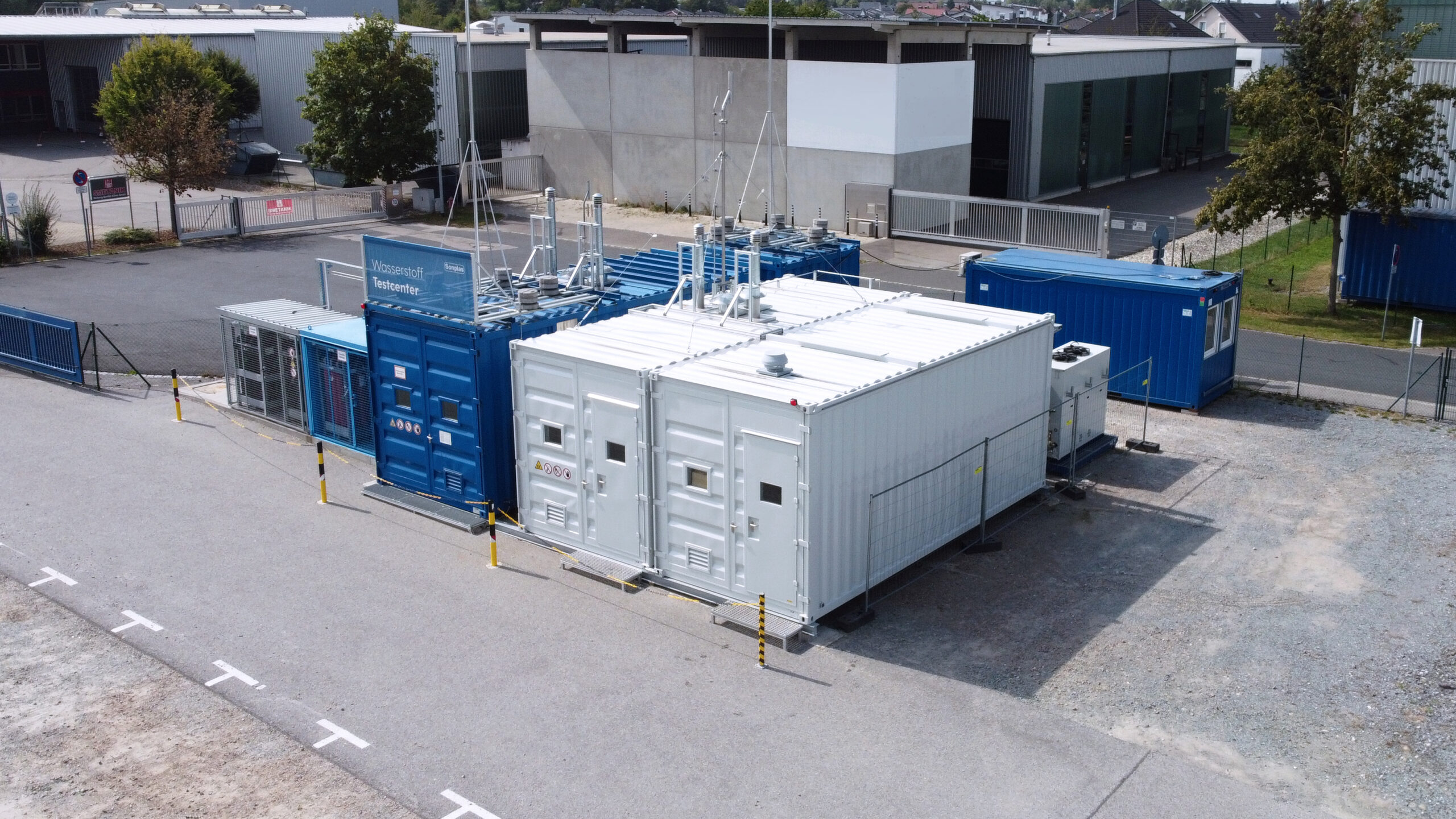
Test center for injector components for hydrogen combustion engines
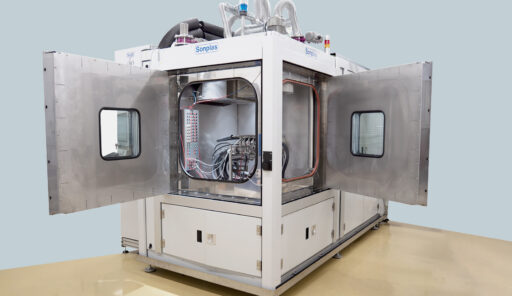
For applications in hydrogen-based drive systems, we have already implemented a test center for injector components of hydrogen combustion engines. Various tests can be carried out there, including flow measurement, pressure cycling tests, and durability testing.
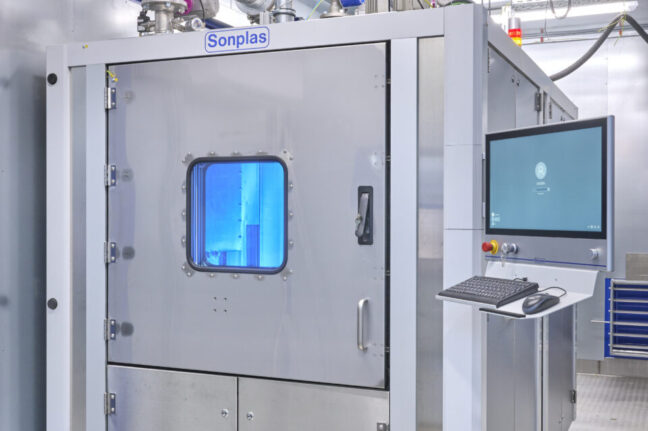
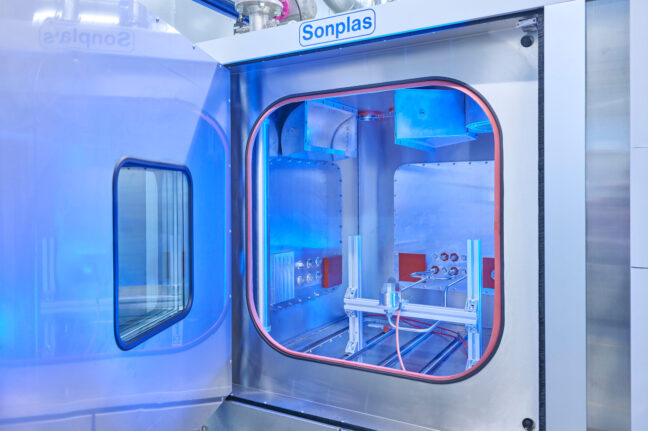
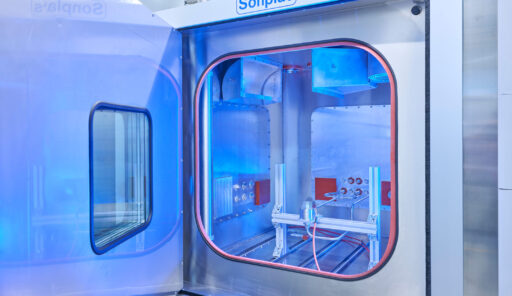
Part of the system is also an inerted thermal chamber, ensuring realistic yet safe testing conditions.
Explore more about our test center here!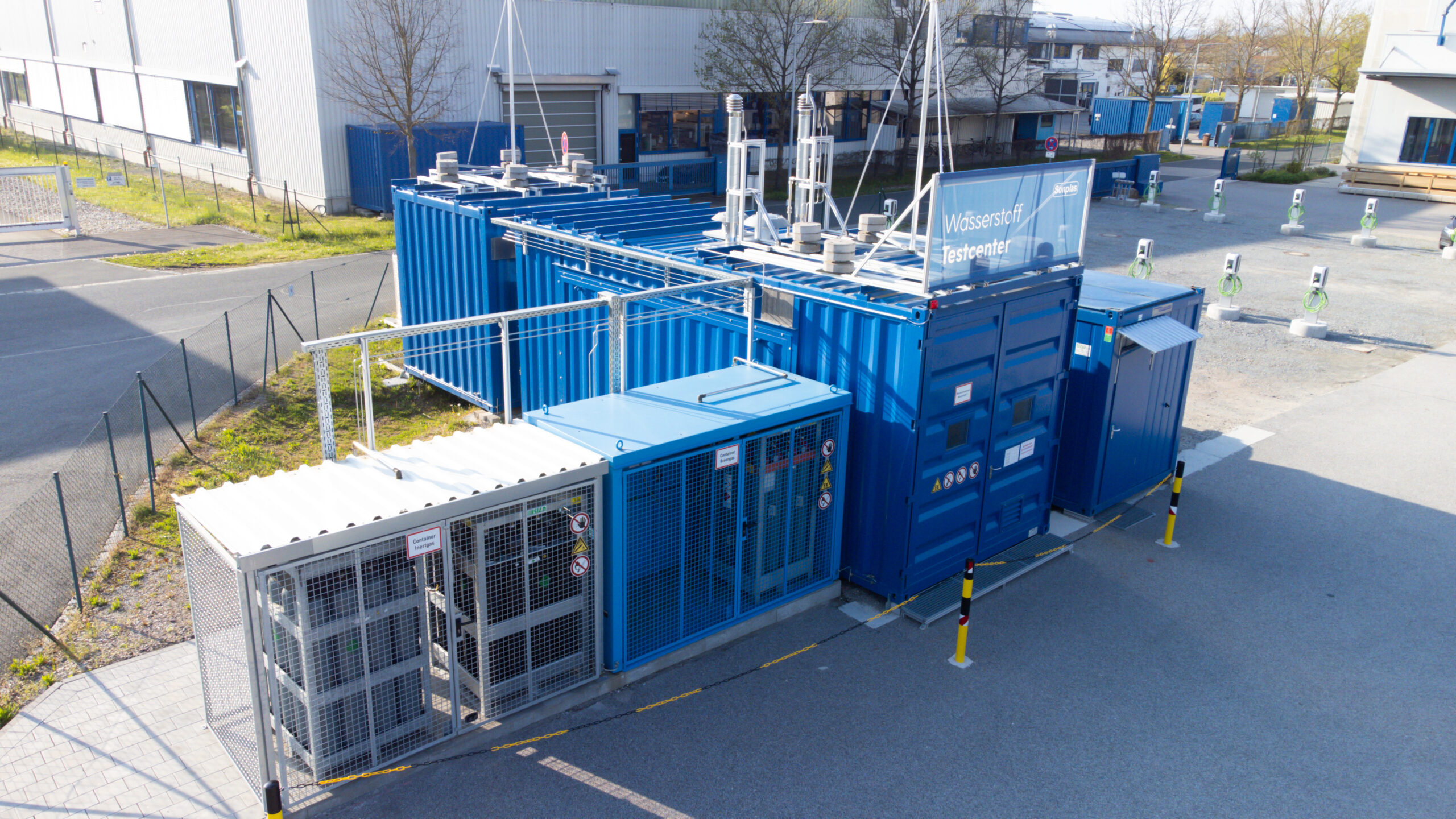
Test center for balance-of-plant components
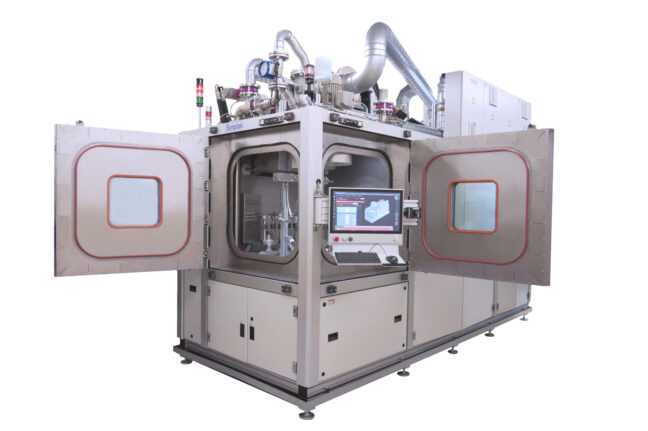
For applications in fuel cell systems, we have already implemented dedicated test benches. One example is our test center for balance-of-plant components (BoP), including the complete testing and infrastructure setup. The system consists of a test container and a separate technical container, integrating both the test bench itself and all measurement and safety systems.
The test bench is used for the development and validation of BoP systems and components for applications in aviation, mobile applications, and stationary industrial systems. Functional and durability tests can be carried out under realistic conditions, including the simulation of temperature variations in both the environment and the medium. This enables components to be specifically designed for their intended operating conditions and reliably validated for series use.
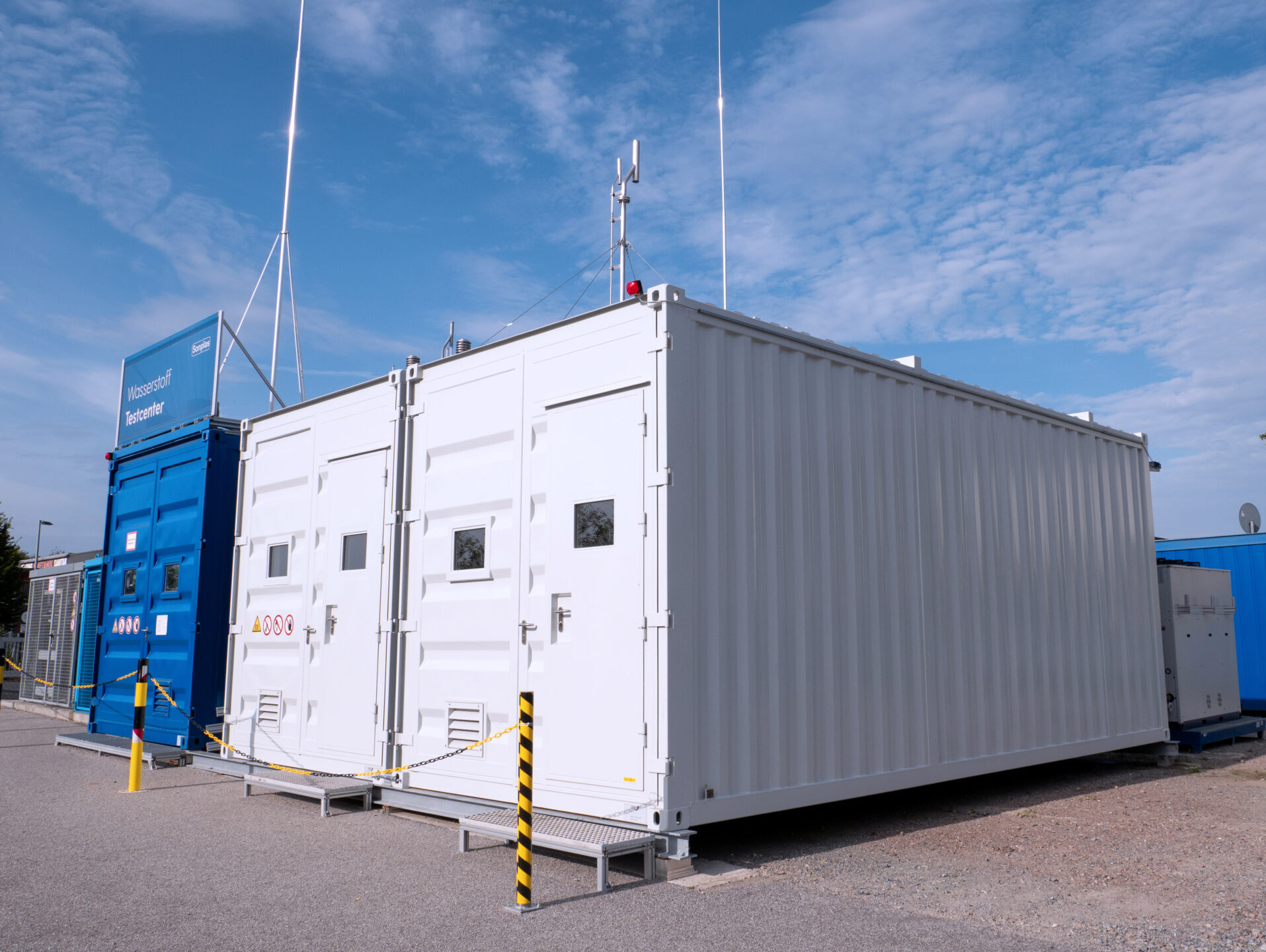
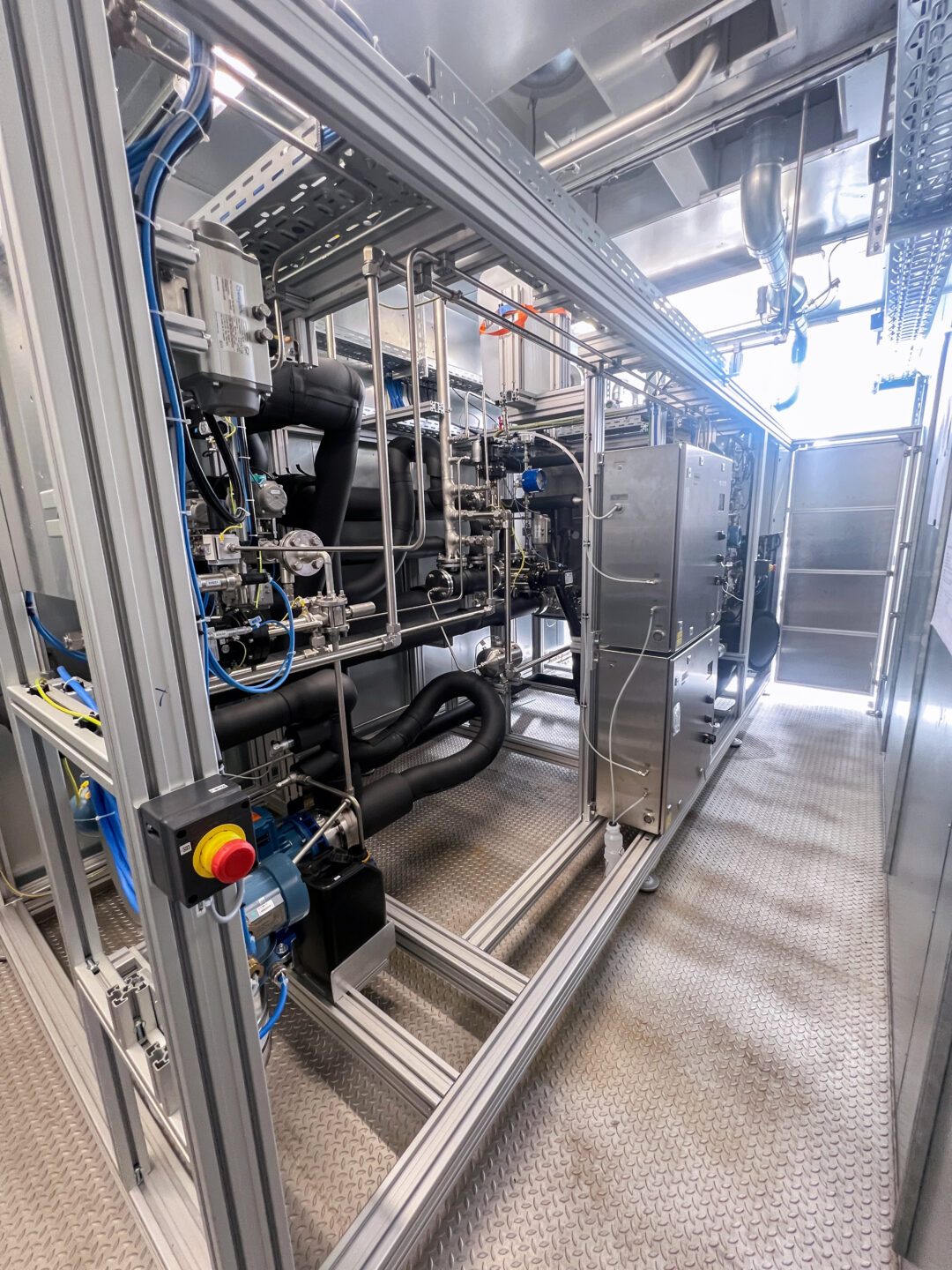
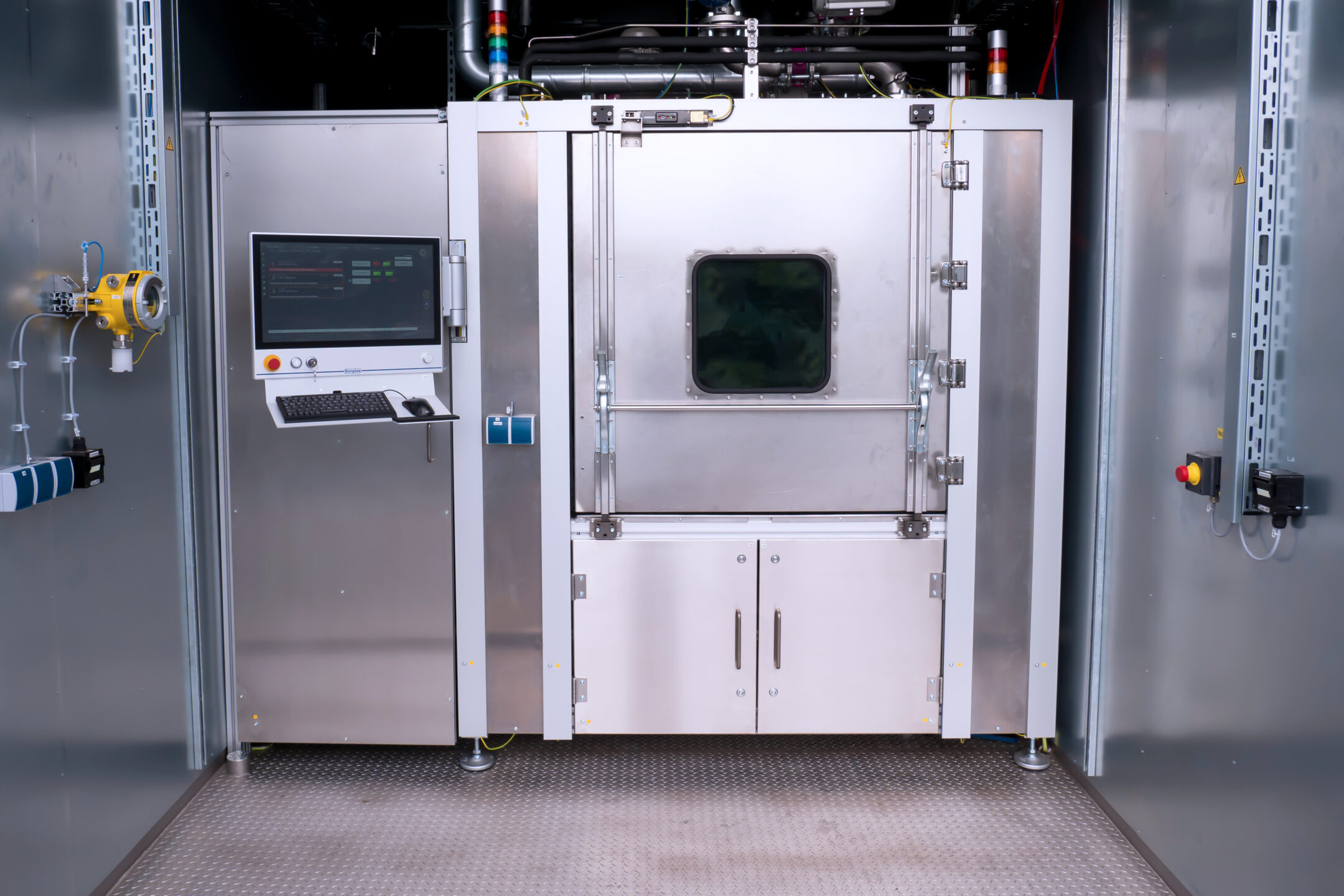
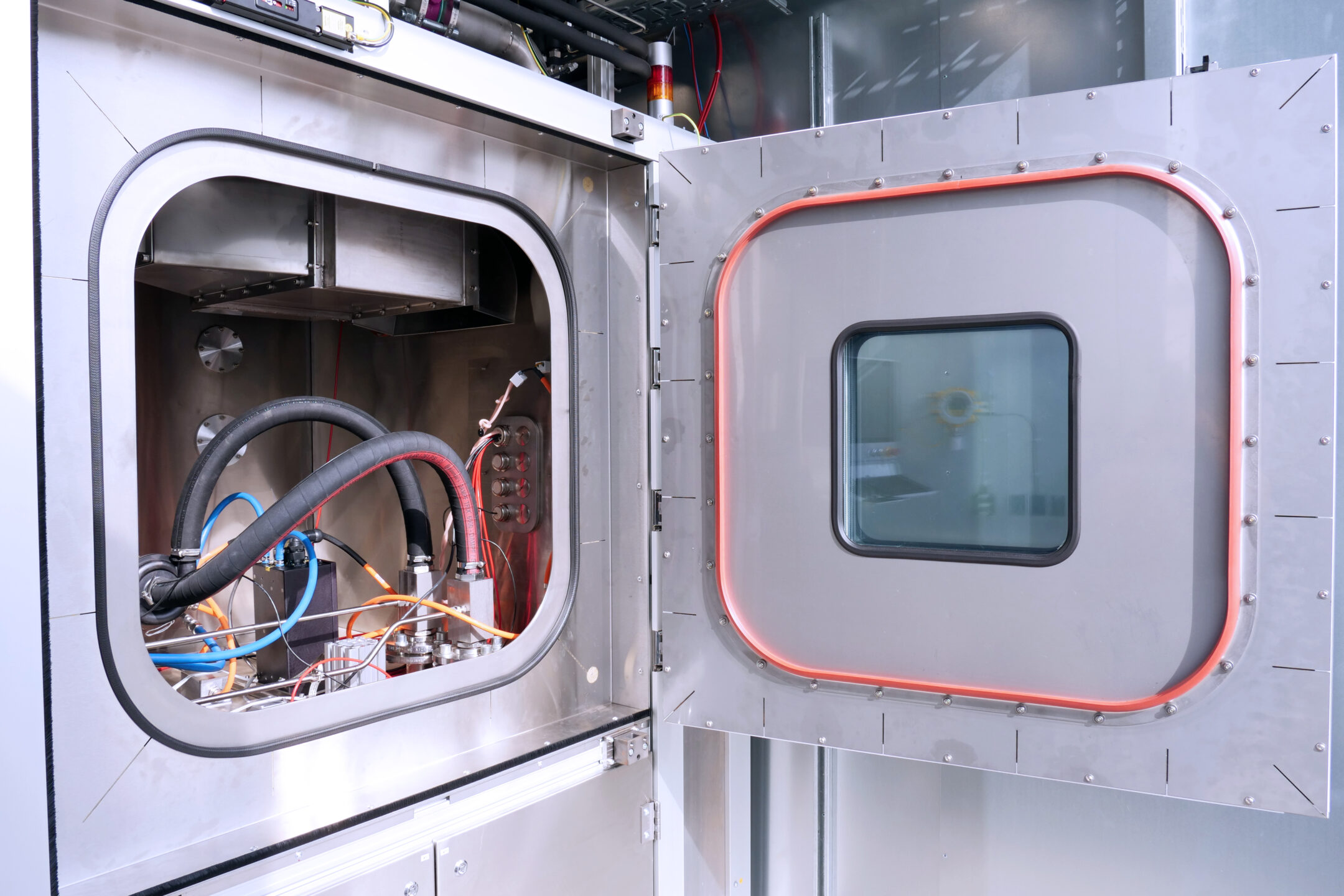
Test center with infrastructure for BoP components for fuel cell systems
Are we the right partner for methanol and ammonia applications as well?
Yes. We also develop test systems for applications involving methanol and ammonia, enabling functional and endurance testing of injectors as well as other components for stationary or maritime combustion engines. The following characteristics, among others, are analyzed:
- Valve characteristics
- Switching times
- Pressure losses
- Injection behavior
- Service life
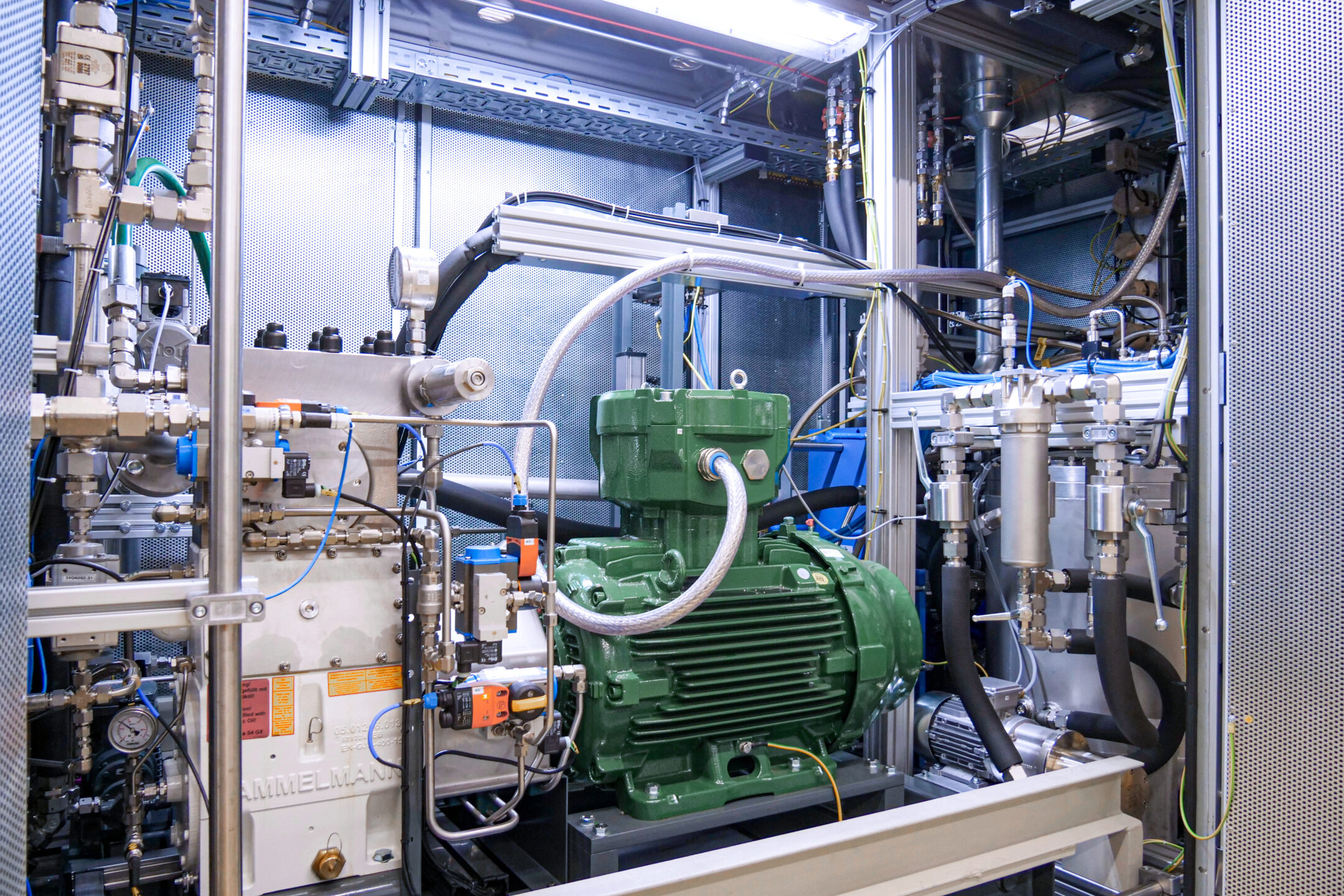
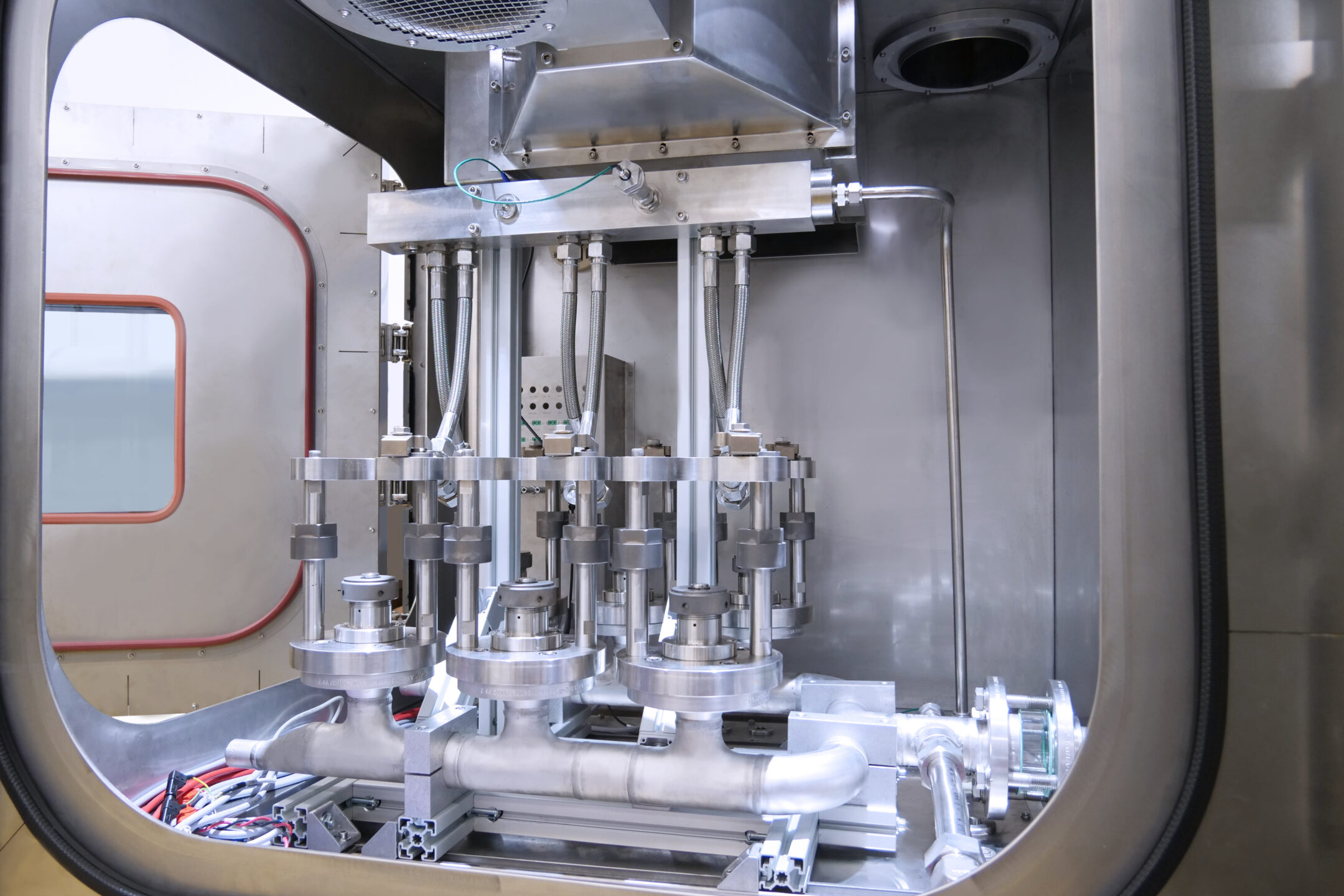
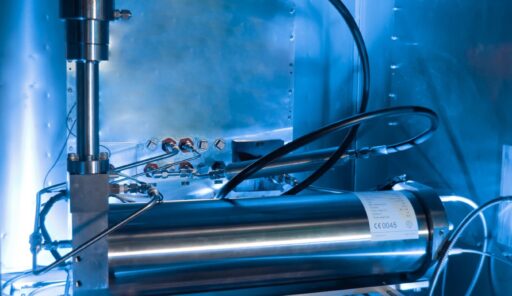
Left: High-pressure pump unit
Right: Thermal chamber (interior view)
A key analysis tool: the IAV Cross Injection Analyzer
For the detailed analysis of injection systems, we have developed the IAV Cross Injection Analyzer – a powerful tool for the hydraulic characterization of injection valves. Especially in applications involving alternative fuels such as hydrogen or methanol, the system enables precise investigation of injection processes and spray characteristics.
This allows injection systems to be analyzed in detail under realistic conditions and specifically optimized to reliably meet the requirements of alternative fuels.
Explore more about our IAV Cross Signal Analyzer here!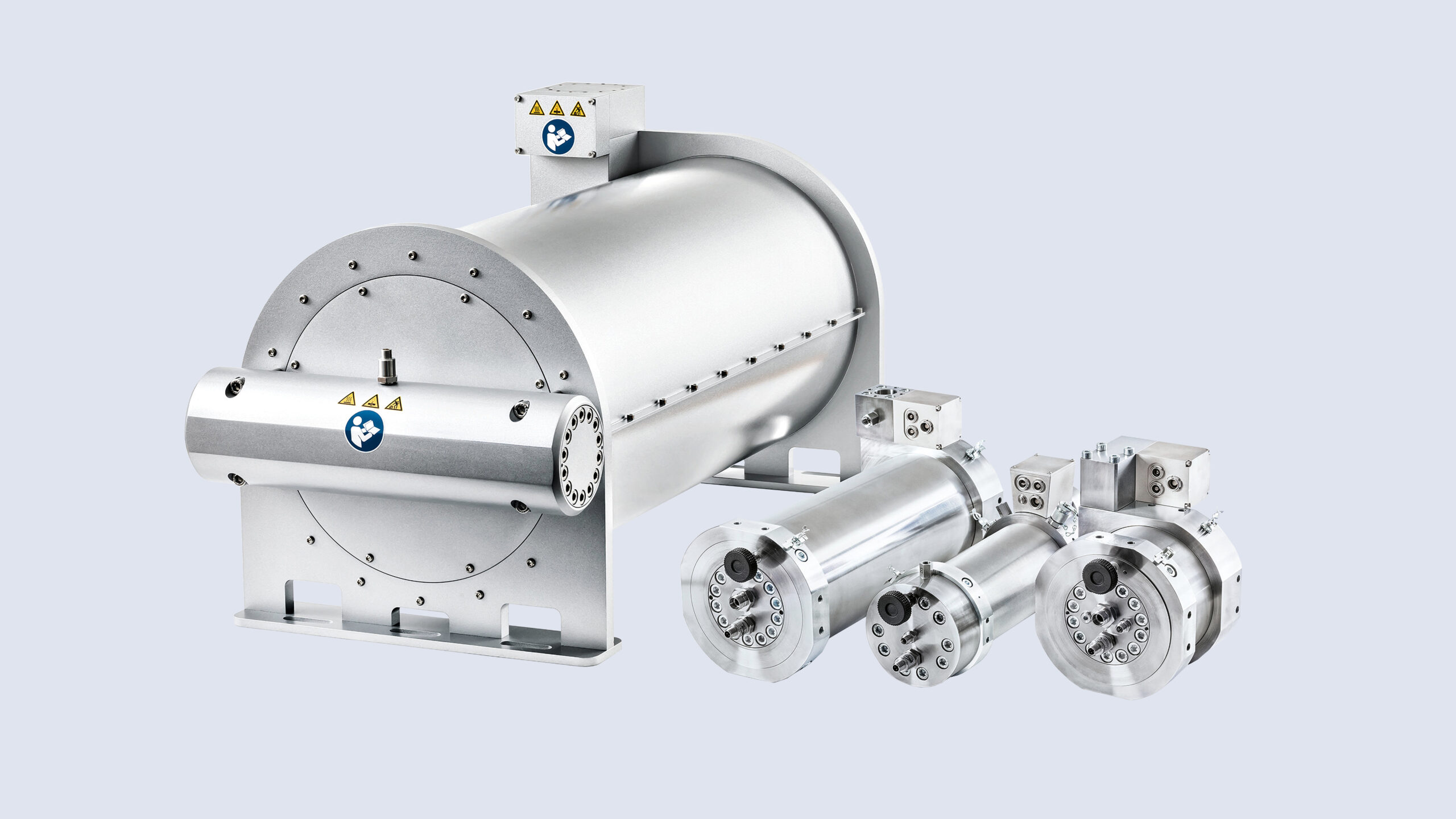
Partnerships for enhanced technology exchange
WTZ Roßlau and Hydrogen Alliance Bavaria
We collaborate with WTZ Roßlau in the development and testing of components for alternative fuels. The combination of research expertise and our experience in mechanical and plant engineering enables new technologies to be transferred into industrial applications more quickly. One Partnership – All Fuels.
As a member of the Hydrogen Alliance Bavaria, we work together with partners from industry, politics, and academia to advance technologies for hydrogen-based energy systems and drive solutions.
Explore more about our cooperations and partnerships here!
Do you have any questions? Contact us.

Our references
Solutions that speak for themselves
We understand what drives our customers
Frequently asked questions in alternative fuels
Thanks to our many years of experience and numerous successful projects we understand what drives you!
What qualifies Sonplas to be the right partner for your testing solutions for alternative fuels?
We have more than 30 years of experience in injection technology as well as in handling and testing a wide range of media. For over six years, we have been intensively focusing on alternative fuels. In this field, we have established a dedicated expert team that specifically addresses the requirements of new fuels and their testing technologies.
Based on this expertise, we have already successfully implemented several major projects, including a hydrogen test center and a test center for balance-of-plant components. This experience, combined with the continuous development of new know-how, makes us your ideal partner for alternative fuels.
We develop components for alternative fuels. Why should they be tested under realistic conditions?
These components must operate reliably in real applications under varying operating conditions—from low loads to high stress levels. Especially with alternative fuels such as hydrogen, methanol, or ammonia, additional demands are placed on injectors, valves, and other components.
Our test benches allow these conditions to be simulated realistically and key properties to be analyzed. This provides you with reliable data for optimizing and validating your systems before they are deployed in real drive systems.
We want to ensure that our components perform reliably over the long term. Can Sonplas support us in this?
Absolutely. With our test systems, endurance and lifetime tests can be carried out under realistic as well as extreme conditions. Components are operated over extended periods, allowing loads, wear, and potential weak points to be identified at an early stage.
This helps you assess the reliability of your components before they are used in real applications.
