Rounding, Deburring or Flow Calibration?
Hydroerosive machining: one process, three possibilities
In hydroerosive machining, an abrasive fluid loaded with abrasive particles is pumped under high pressure through the interior geometry of a workpiece. In this way, components can be deburred, rounded or the user is able to calibrate the flow rate of a given bore. This procedure is applied in various industries, ranging from the automotive sector to the watchmaking trade.
Even components with complex shapes frequently have to be ground, rounded, or deburred on the interior. In the automotive industry, for example, these might be injection nozzles for combustion engines or gas injectors in hydrogen combustion engines, implants for medical technology, minuscule components for the watchmaking industry or even cooling channels in specialised screws. Hydroerosive machining is well suited to these particular applications.
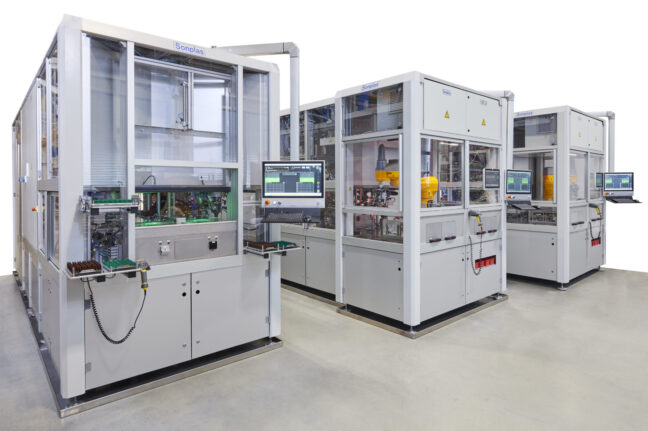
Sonplas GmbH develops and supplies flexible and scalable specialised machinery
for machining, assembly, and testing, which can be enhanced and supplemented
with external technologies according to the client’s needs. In the area of hydroerosive
machining, among other things, our mechanical engineering company offers both comprehensive expertise and the most suitable system concepts.
During hydroerosive machining, a fluid containing abrasive particles flows through
the component along the internal bore intersections or the bore geometry, very much
in the same way that liquid sandpaper would. Werner Riederer, Sales Engineer at Sonplas,
based in Straubing,Bavaria, offers an example: “Suppose the bore has a diameter of 2 mm
and merges into a bore with a diameter of 1 mm. At the bore taper there is an edge where the abrasive particles accumulate due to the high pressure. This causes erosion to occur. And that is dependent on how strong the pressure of the fluid is, and which abrasive particles are used.”
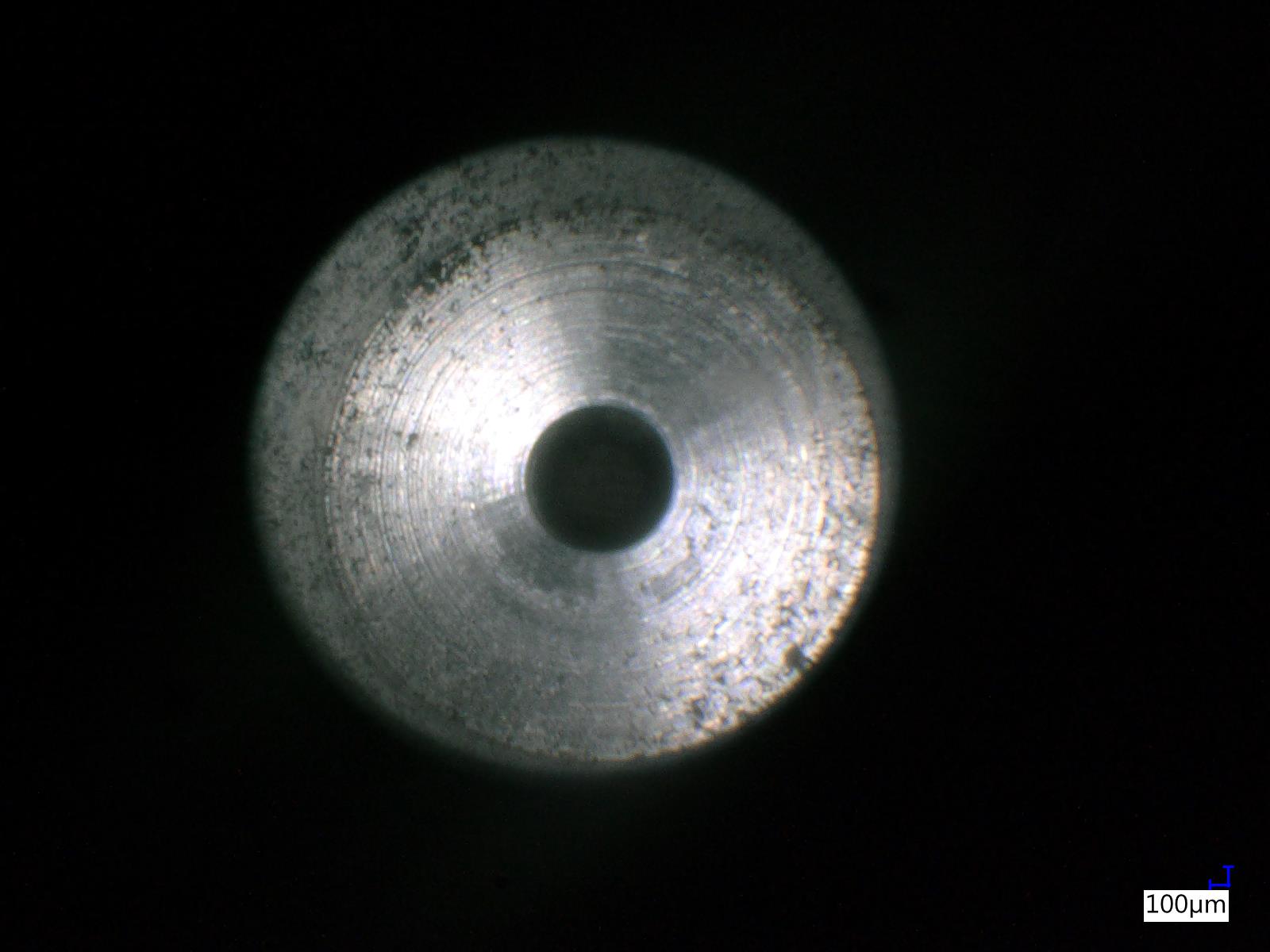
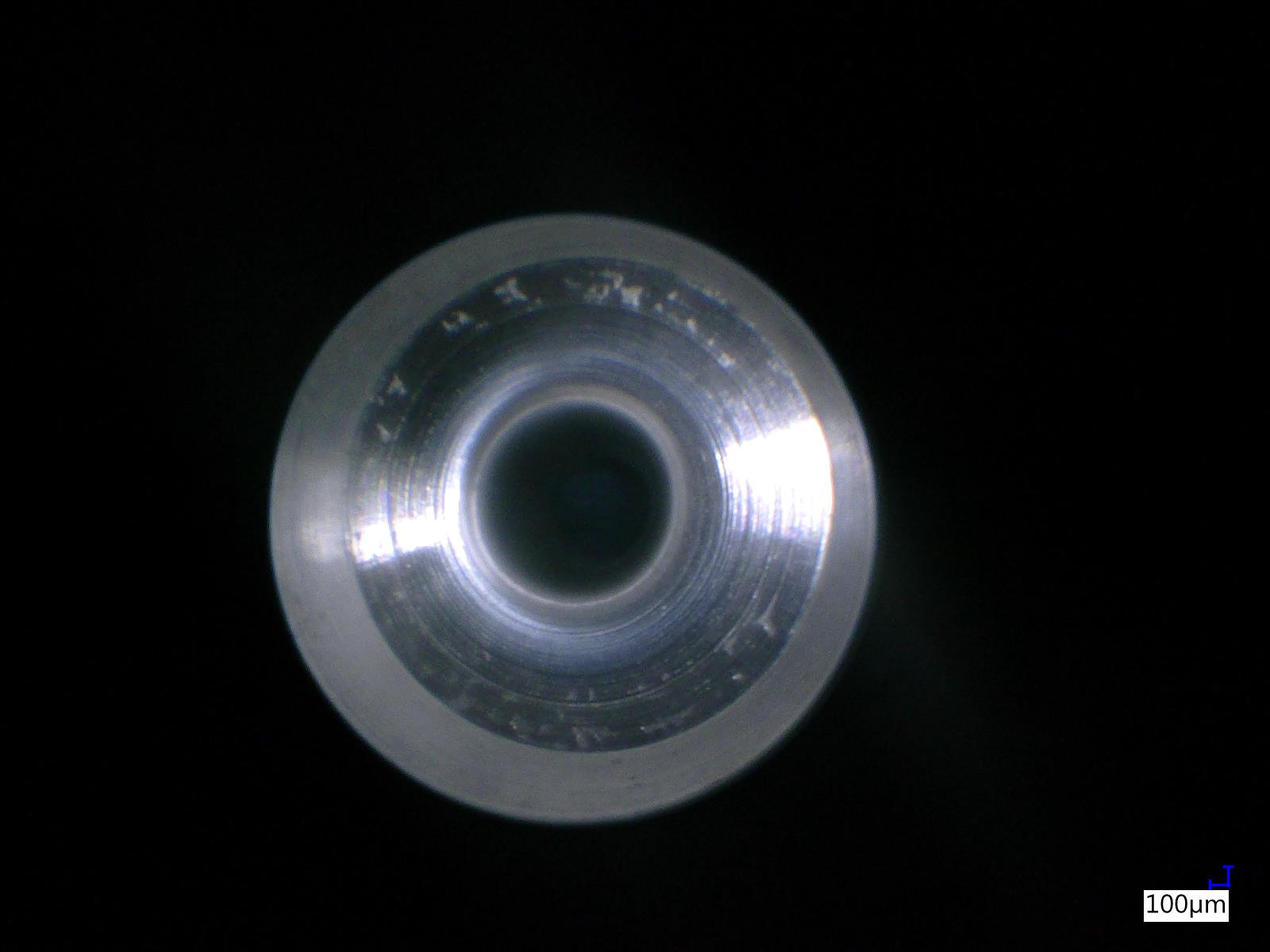
left: The sample shows an aluminium component before hydroerosive machining
right: The component after hydroerosive machining
Flexibility in the choice of components
A very wide range of workpieces can be machined. The decisive factor in this is the size of the bore that
needs to be worked. Using the systems, it is possible to grind bores with diameters from 0.1 to 5 mm.
The workpieces can be made of steel or stainless steel, though aluminium, magnesium, and precious
metals such as gold, silver or platinum can also be machined. Other materials include hard metals,
such as for cutting inserts for tools, glass, ceramics, plastics, and fibre-reinforced composites.
Optimally adapted grinding medium
The characteristics of the grinding medium are first specially adapted to the requirements of the workpiece
that is to be machined: optimised rheological specifications are defined in order to achieve the desired flow
rates, geometries, and degrees of rounding. Depending on the application, the media are formulated with mineral
oil or water and adjusted to viscosities from 0.5 to several 10,000 mPa·s. The type, concentration and particle size
distribution of the abrasives present in the medium decisively determine the achievable removal rate and surface
finish of the workpieces.
Highly abrasive ceramics such as boron carbide, aluminium oxide or even artificial diamond can be used as abrasive
grains. “This versatility allows us to machine components with optimised cycle times,” explains Riederer. Through
targeted additivation, the grinding fluids also serve as effective corrosion protection for the client’s machined com-
ponents. Additionally, due to their good wetting properties and their compatibility with rinsing and testing fluids,
particles that cannot be removed in any other way can be washed out with ease. Intelligent process technology can
be applied to meet the required cleanliness classes according to VDA19/ISO16232. The user can thus benefit from
a comprehensive process that eliminates the need for further costly processing steps.
Safely calibrate the flow rate
Alongside rounding and deburring, the hydroerosive technique can also be used for the flow calibration of bores.
For this purpose, the user selects a fluid with low viscosity. Werner Riederer provides a typical example:
“The injection nozzle used in engine technology has a flow rate of 900 ml/min after EDM processing.
We place the component in our machine, round the inlet edges of the injection holes and increase the flow by 10
to 15 %.” At the end of the hydroerosive process, the nozzle in this example has a flow rate of 1000 ml/min.
Added to this is another advantage: after EDM, the accuracy of the bore is ±3 %, after the hydroerosive process
it is a process-secure ±1 %. Hydroerosive machining therefore allows the user to calibrate the flow on their work-
pieces extremely accurately. The operator can continuously monitor the increasing flow rate online throughout
the entire process, precisely adjust the required value and thus set the flow rate tolerances in a reliable and
process-safe manner.
Whether deburring, rounding, or calibrating, the user has three different application options at their disposal with
hydroerosive machining. If they adjust the respective parameters, they can meet the different machining requirements
reliably and in a reproducible way. “The method thereby fulfils all the drawing and component requirements,” adds
Sonplas expert Riederer.
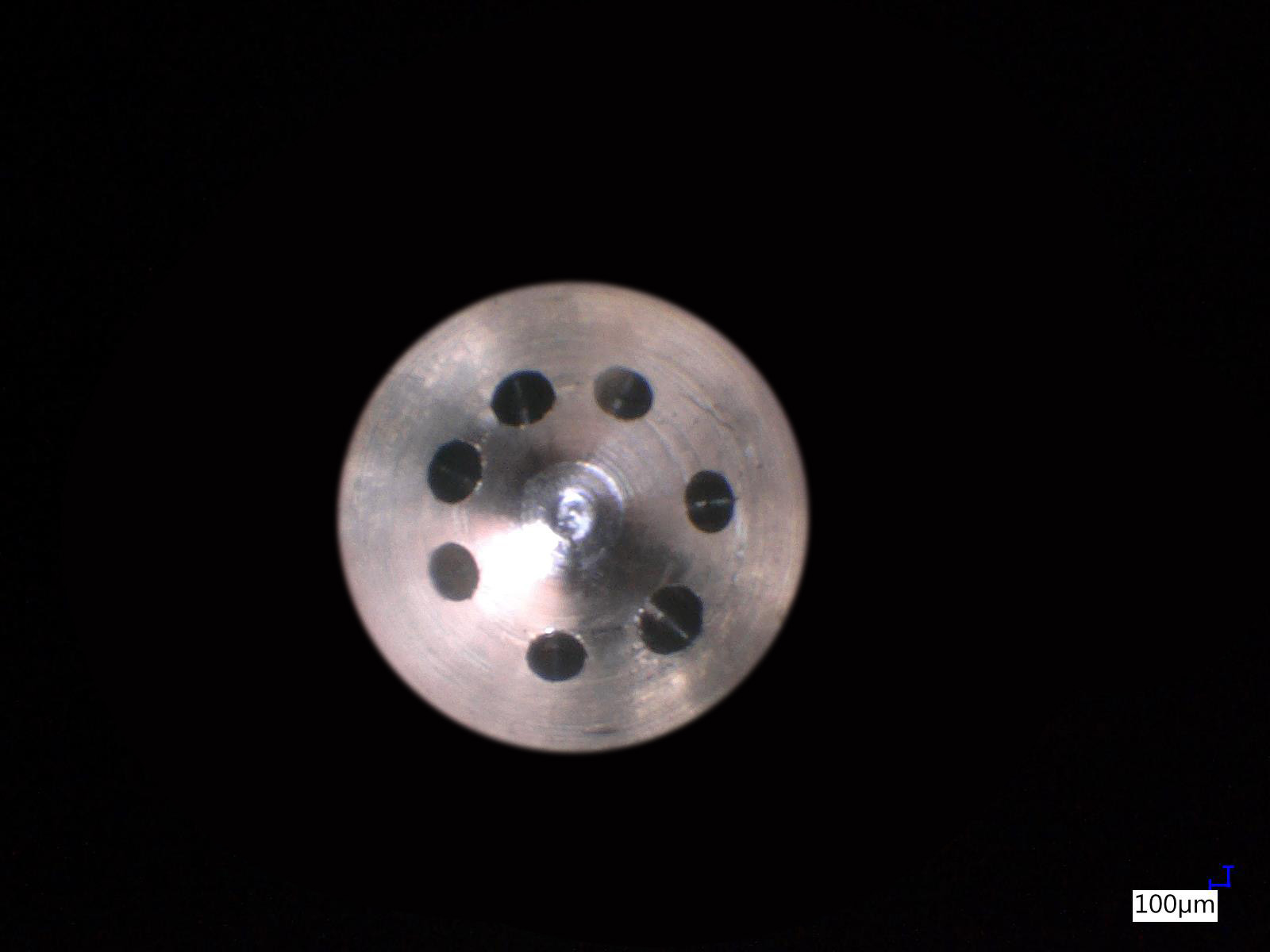
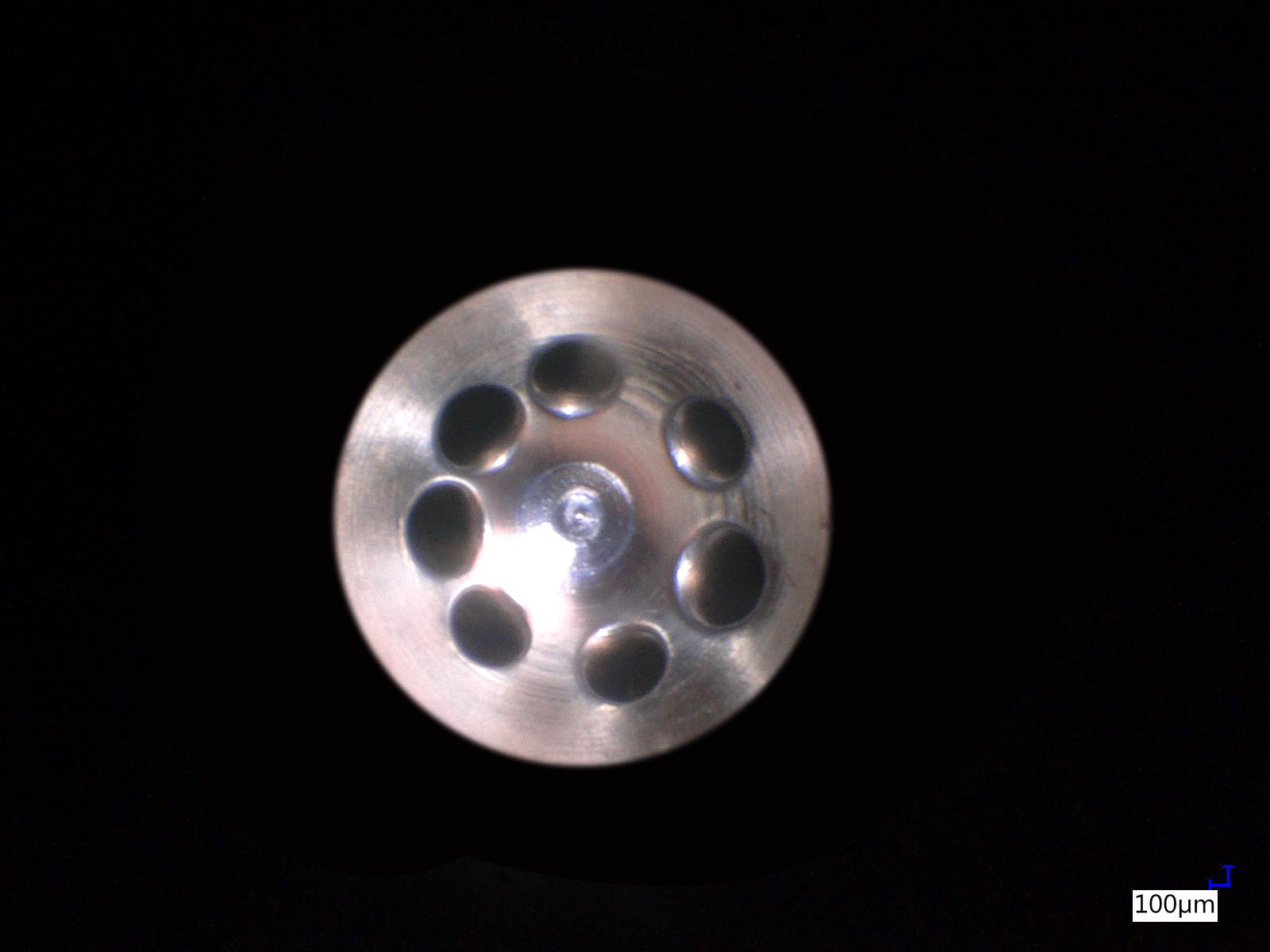
left: The sample shows a nickel component before hydroerosive machining
right: The component after hydroerosive machining
Customised systems
Sonplas also equips the systems with rotary tables. This means that the processes such as grinding, rinsing and/
or measuring the flow can run in parallel. Depending on the requirements, each component may pass through up
to eight stations. The longest cycle time is determined by the slowest work step. The user can adapt their customised
machine to their requirements in a modular way and, for example, integrate process stations such as rinsing or measuring equipment at a later stage. Databases and MES systems can also be connected.
The systems are closed systems. The operator at the machine merely has to take care of the manual loading or changing
the pallets if necessary – the process proceeds systematically. For larger quantities, automatic loading with a robot loading module, for example, is also a possibility. In this way, processes can be flexibly interlinked.
