Time saving through artificial intelligence
Sonplas is using AI algorithms for data predicition
High-pressure petrol pumps are subjected to a sequence of various function and performance tests at
the end of the production process. One of the particularly important and time-consuming tests in this
end-of-line test (EOL test) is the leakage measurement. Shortening the test sequence has considerable
potential to save time and money here. Sonplas has dedicated itself to tapping this potential with its
internal innovation project.
The aim here was to forecast the measurement result of the pressure drop test of high-pressure petrol
pumps as early as possible and with a maximum tolerance of 0.5 bar. Different machine learning model
approaches, such as simple function equations and complex models such as deep neural networks, were
compared with each other for this.
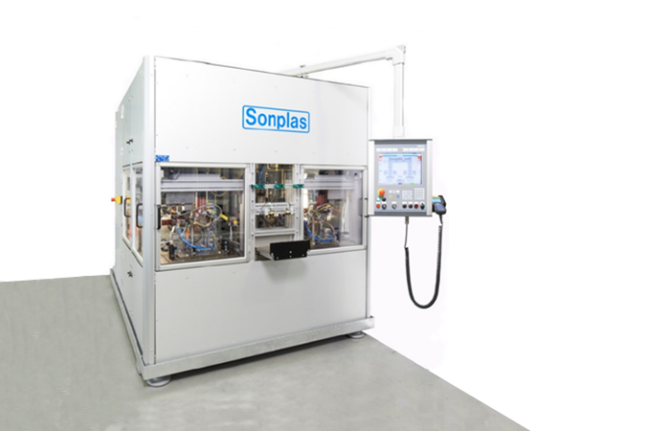
Sonplas GmbH is deeply rooted in the automotive industry, with testing equipment
that guarantees the quality of many components being an important part of the portfolio. One of these systems is the test bench for high-pressure petrol pumps
with direct injection, also called GDI high-pressure petrol pumps.
After pressurisation by the machine, the pressure drop is then measured in the manufacturer-specified time range and a decision is made on the basis of the
pressure drop as to whether a pump is to be rated as good or bad. The problem
here is that the machine cannot perform any other additional tests or tasks within
the waiting time, so merely “waits out” the time.
This innovation project aimed to reduce testing time by using AI algorithms.
Four different AI models were compared in terms of precision and savings potential.
The basic approach is known as the time series analysis, which uses past data to predict future trends.
Specifically, measurement data from past pressure tests were trained here. This
training process aimed to predict the course and thus also the end of the curve
without having to carry out the entire measurement. The algorithms therefore learn
to predict the complete course of a pressure drop test with only a few data points.
This prediction should significantly shorten measurement time.
The results that the innovation project managed to achieve with
its best model speak for themselves:
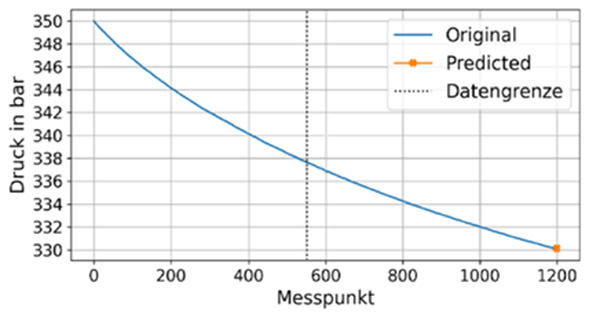
the best model, with only 550 data points (see figure on the right), is able to predict
the result within the required tolerance of 0.5 bar. These 550 data points correspond
to only 5.5 seconds, out of the original 12 seconds of measurement. This meant it was
possible to more than halve the measurement time.
According to current technical standards, the 0.5 bar corresponds to the order
of magnitude of the measurement uncertainty resulting from the combination
of machine and test specimen and can therefore be considered a very good result.
A saving of 6.5 seconds per test specimen results in enormous added value for the
customer-based output and has fully met the innovation project’s expectations.
