Our Assembly and Testing Processes
For every challenge, identifying the best solution and the right technology is what drives us. Depending on project requirements, we draw on a broad portfolio of proven and partly patented processes. At the same time, we collaborate closely with you to develop new processes as tailored solutions for your specific needs.
Our in-house research and development department is involved at an early stage of each project. This enables us to optimize existing processes or develop new ones whenever current solutions reach their limits. The continuous expansion of our process portfolio and expertise makes Sonplas the ideal partner for demanding custom machine solutions – For your success.
Our Assembly and Manufacturing Processes
HydroEROsive machining Joining and coating Welding Cleaning and material removal Rotor assembly Cutting Laser processingHydroersoive Machining – HERO
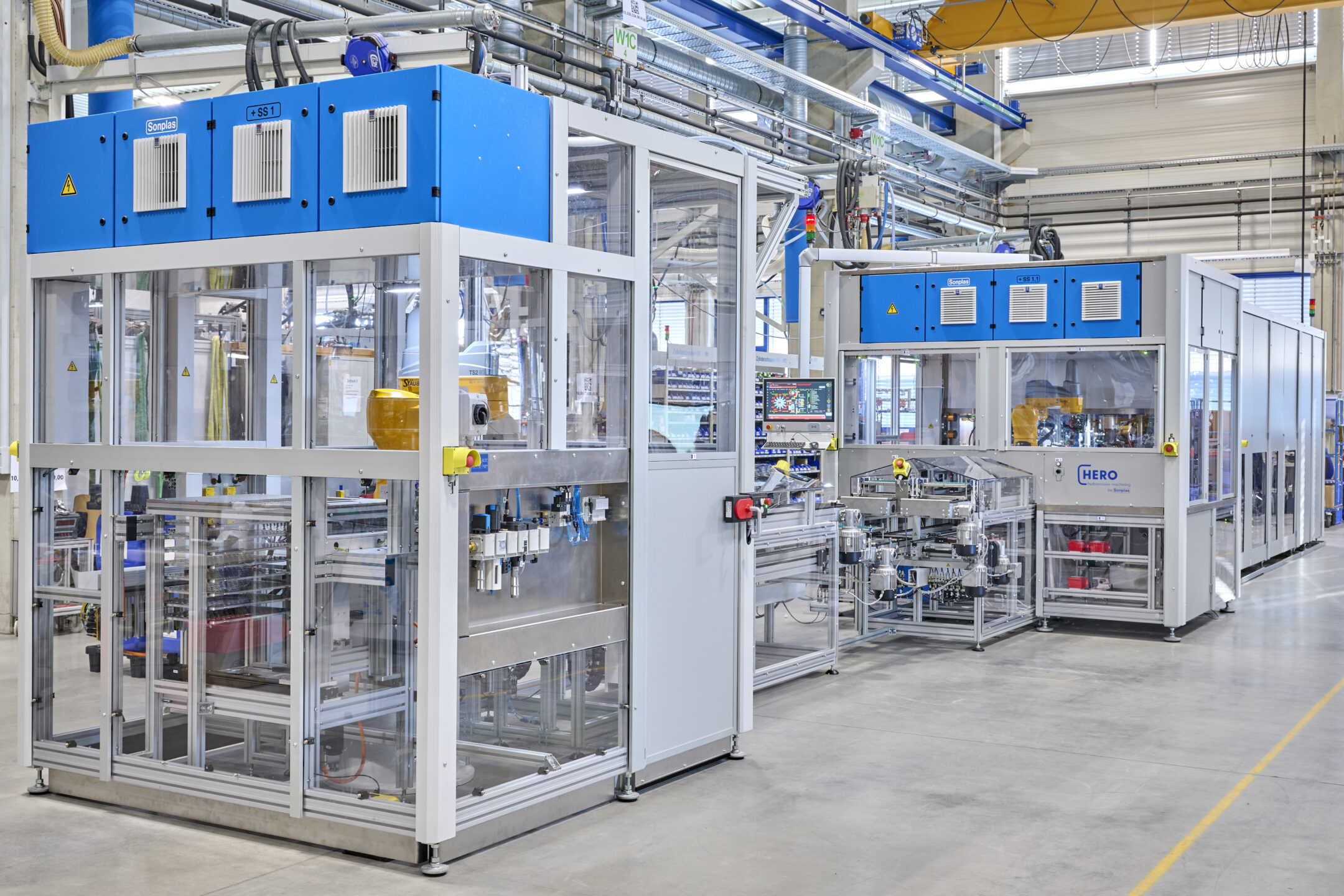
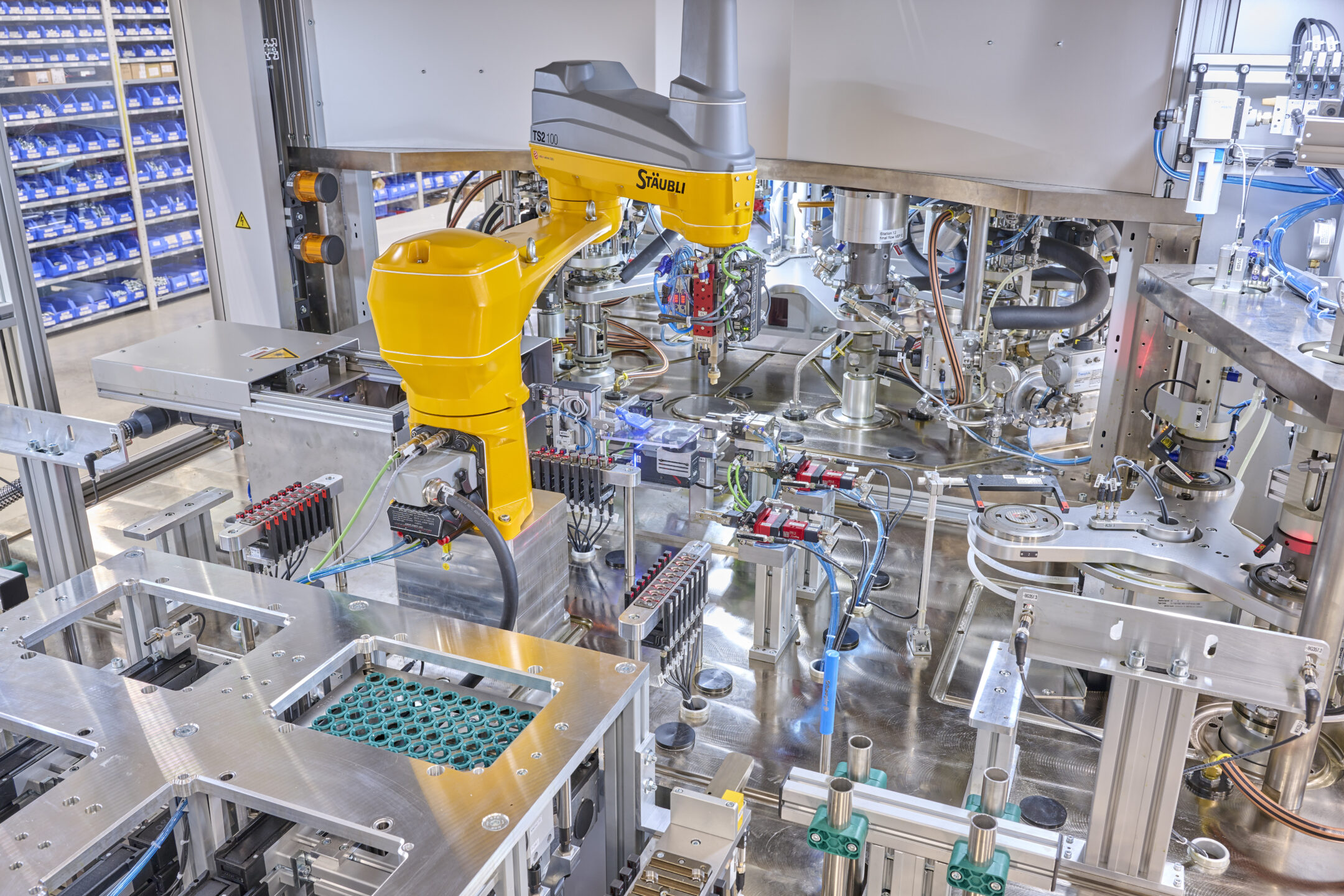
HydroEROsive machining (HERO) is a process developed and patented by Sonplas for the precise finishing of internal geometries. In this process, an abrasive-laden fluid is passed through components under high pressure. With our latest process, HERO Precision Jet, external edges and surfaces can now also be machined. This enables both internal and external geometries of components to be:
- Deburred
- Edge-rounded
- Calibrated
Joining and Coating
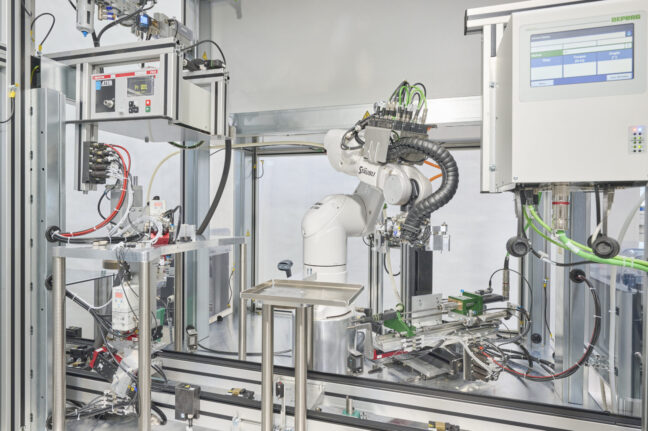
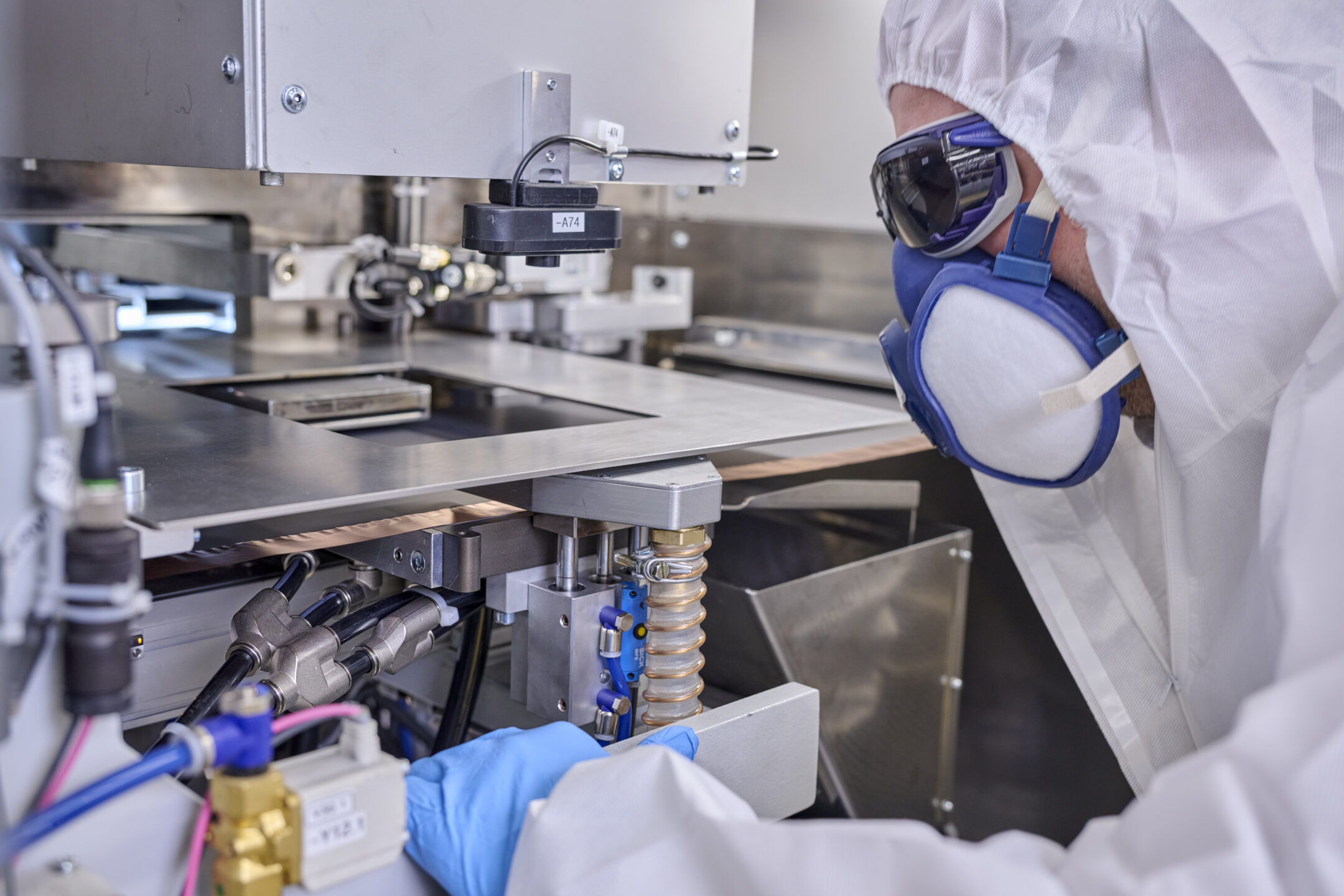
For the precise joining of components, we utilize a range of different joining technologies. A particular focus is on our patented micro-peening process. This is a highly precise press-fit process that enables components to be adjusted with maximum accuracy and without stick-slip effects. The process allows step sizes below 1 µm, press-fit tolerances under ± 2 µm, and cycle times of less than 10 seconds.
In addition, we integrate the following joining and dispensing processes:
- Dispensing
- Force-displacement monitored press-fitting
- Screwdriving
- Brazing
- Pressing
- Thermal staking
- Thermal interference fitting (shrink fitting, hot/cold)
- Splicing
Welding
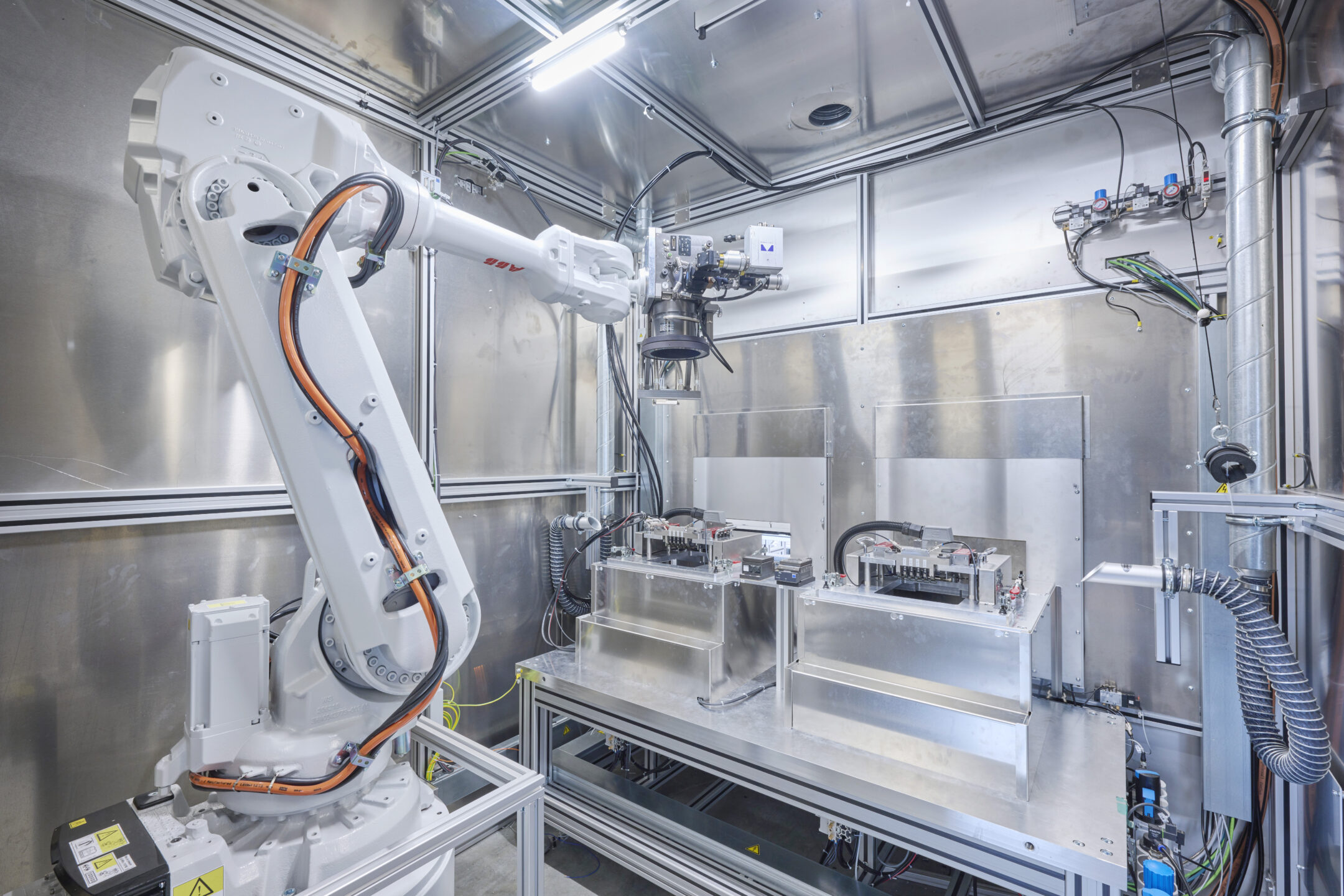
For the permanent joining of components, we apply various welding technologies depending on material, component geometry, and process requirements. A key focus is on plastic welding, particularly laser transmission welding. In this process, the laser beam passes through a transparent joining partner and is absorbed by the underlying material, allowing heating and joining to occur almost simultaneously.
In addition, we realize the following welding processes:
- Laser welding
- Capacitor discharge welding (CD welding)
- Copper welding
- Ultrasonic welding
- TIG welding
Cleaning and Material Removal
Clean and properly prepared components are the basis for stable assembly processes. Using a range of cleaning and material removal technologies, we reliably remove particles, residues, and contaminants from surfaces, creating optimal conditions for subsequent process steps. Depending on requirements, we apply the following processes:
- Washing
- Laser cleaning
- Plasma cleaning
- Cleaning with ionized air
Rotor Assembly
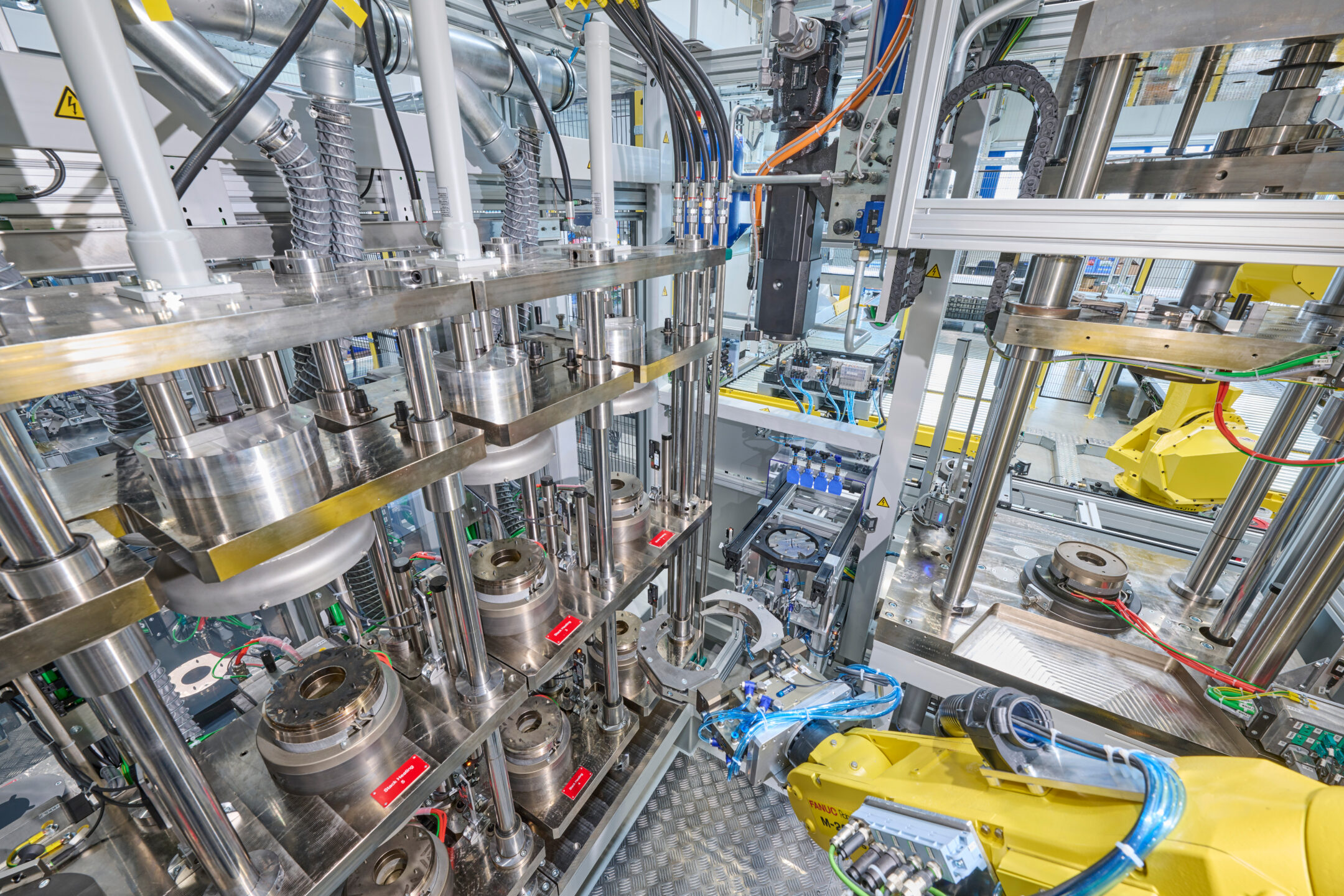
With decades of experience in rotor technology, we possess deep process understanding and extensive know-how, with more than 100 rotor concepts in our portfolio. A key process is the joining of shaft and rotor by thermal interference fitting (hot or cold shrink fitting). Depending on the application, various methods are used, including convection heating, contact heating, induction heating, or infrared heating, as well as convection cooling or cooling with liquefied gases such as nitrogen. These methods can be applied individually or in combination.
Another core competence is magnet fixation. Over the years, we have implemented all common fixation technologies and are therefore among the leading providers worldwide. These include, among others, crimping, 1K glue filling, transfer molding, injection molding, and UV pre-curing.
In addition, we also realize all other relevant processes such as:
- Magnetizing
- Alignment
- Balancing (additive or subtractive)
- Contactless measurement
- Electrical-inductive functional testing
Cutting
For the precise separation of materials and components, we integrate various cutting technologies into our systems. These include:
- Laser cutting: Enables notching, slitting, and singulation processes. The contactless nature of the process ensures high cutting speeds and a high edge quality with maximum precision.
- Punching: A mechanical cutting process in which material is separated from strip or sheet using a dedicated cutting tool.
Laser Processing
Laser processing enables precise, flexible and non-contact operations for a wide range of materials. A particular focus is on laser cutting, where we realize solutions for notching (roll-to-roll), slitting (roll-to-roll) and singulation. This allows high cutting speeds to be combined with minimal heat input and clean cut edges.
In addition, we integrate further laser-based processes such as:
- Laser marking
- Laser welding
- Laser cleaning
Electrical and Magnetic Testing
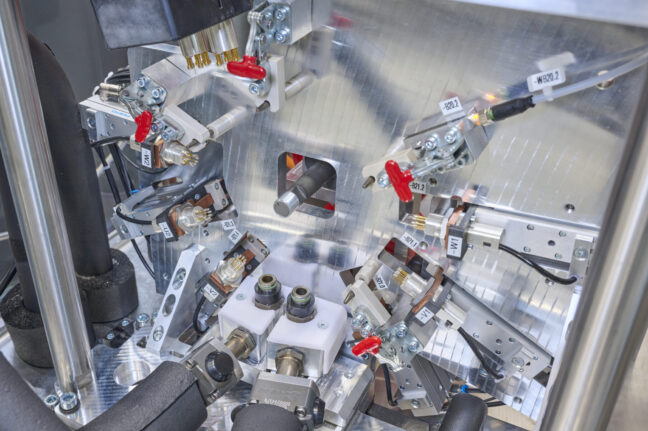
The testing of electrical and magnetic properties is a key element of many of our systems. We benefit from our in-house electronics manufacturing, where, among other things, contacting solutions for our equipment are developed. In addition, we operate an in-house electronics test laboratory equipped with comprehensive testing equipment, enabling us to develop, validate, and optimize test procedures. This allows us to integrate, among others, the following tests:
- Resistance, inductance, and insulation measurement
- Magnetic field measurement
- Current and power measurement
- High-voltage (HV) testing
- Flashing of calibration data
- Safe launch testing
- Speed measurement
- Impedance spectroscopy
Media and Thermal Management
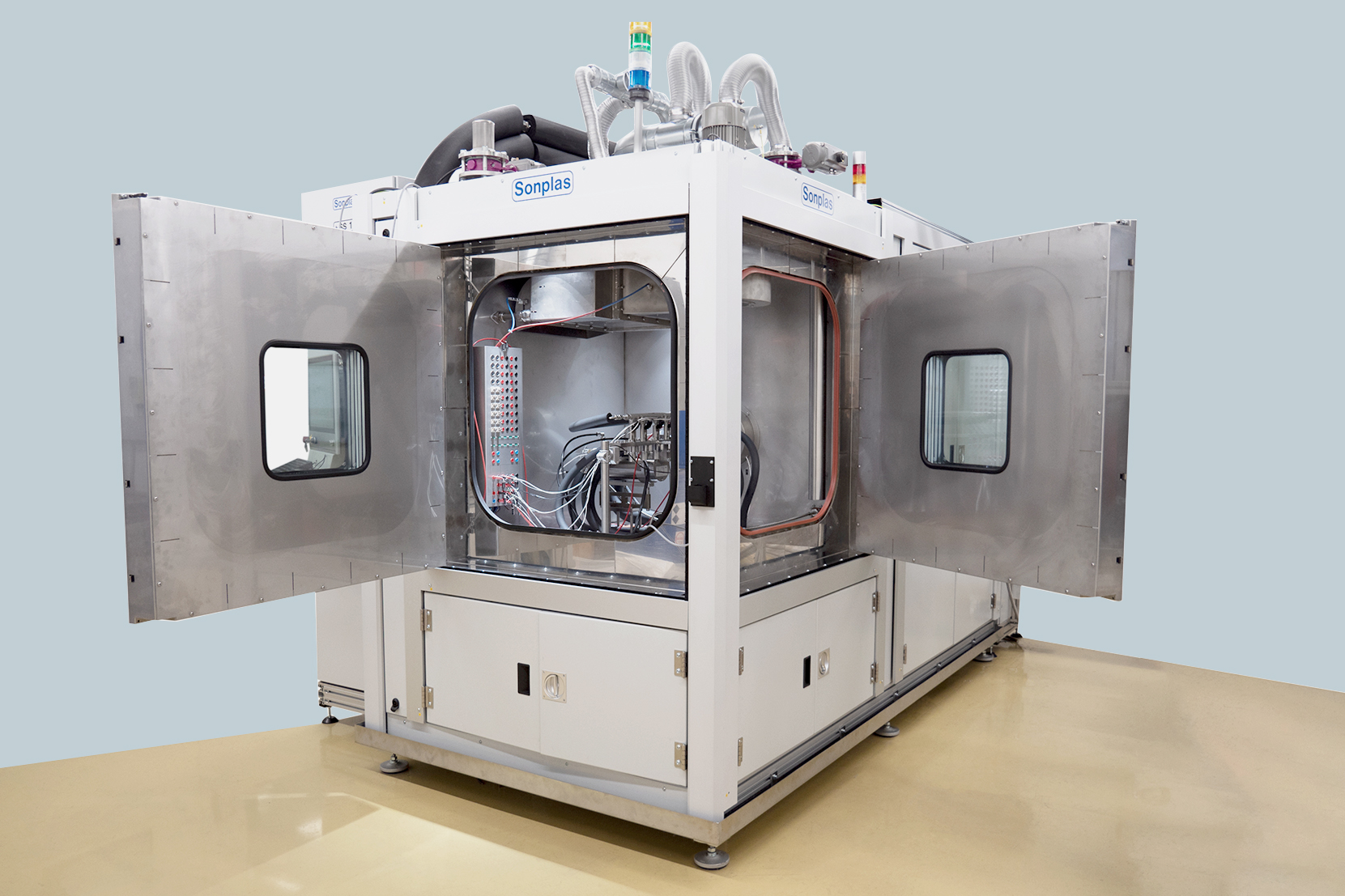
The precise handling of liquids and gases, as well as controlled thermal management, are core competencies of Sonplas. As a long-standing partner for applications involving conventional and alternative fuels, we offer extensive experience in media conditioning and handling, as well as in the design of corresponding test processes.
Thanks to our HERO process, we not only possess a unique expertise in flow calibration, but also in handling abrasive media. Another key focus is our ATEX competence: with our own ATEX-certified in-house test facility and self-developed, certified thermal chambers, we develop and validate test processes involving explosive media.
In addition, we have many years of experience in:
- Pressure pulsation testing
- Hydraulic and pneumatic flow testing
- Opening pressure testing and adjustment
- Particle measurement and contamination analysis
- Nozzle geometry testing
- HC emission testing
- Injection rate measurement / shot-to-shot measurement with our self-developed power stage for time-synchronous control
Optical Testing
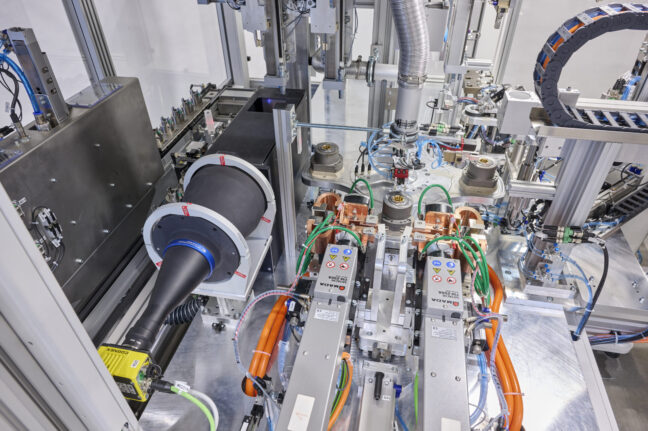
For automated quality control, we utilize camera-based inspection systems. We rely on a wide range of vision systems from leading manufacturers such as Keyence and Cognex. In addition, our in-house developed image processing system SonVision is continuously enhanced and can be individually adapted and implemented for each customer process. We also employ customized deep learning models that are specifically trained for the respective application. This enables us to integrate the following inspections:
- Dimensional inspection
- Component identification
- Optical character recognition (OCR)
- Surface and defect inspection
- Process documentation
- Process evaluation
- AI-based anomaly detection
- Spray testing
Leak Testing
Reliable leak testing is critical for the functionality, safety, and environmental compliance of many components. With decades of experience in leak testing, we develop and integrate project-specific testing methods tailored to your requirements.
In air leak testing, the test part is pressurized or evacuated and then checked for leakage via pressure decay or pressure rise measurement. Typical measurement ranges are between 0.1 and 10 cm³/min.
Helium leak testing enables highly precise measurements down to a leakage rate of 1.0 × 10⁻⁸ mbar·l/s. Depending on the application, tests are performed either as integral measurements in vacuum chambers or as local inspections using sniffer probes.
In hydraulic leak testing (wet leak testing), the test part is subjected to a liquid medium. Specialized measurement systems detect even the smallest leakage flows. Thanks to the high measurement resolution, leakage rates below 1 µl/min can be reliably identified.
Mechanical and Dynamic Testing
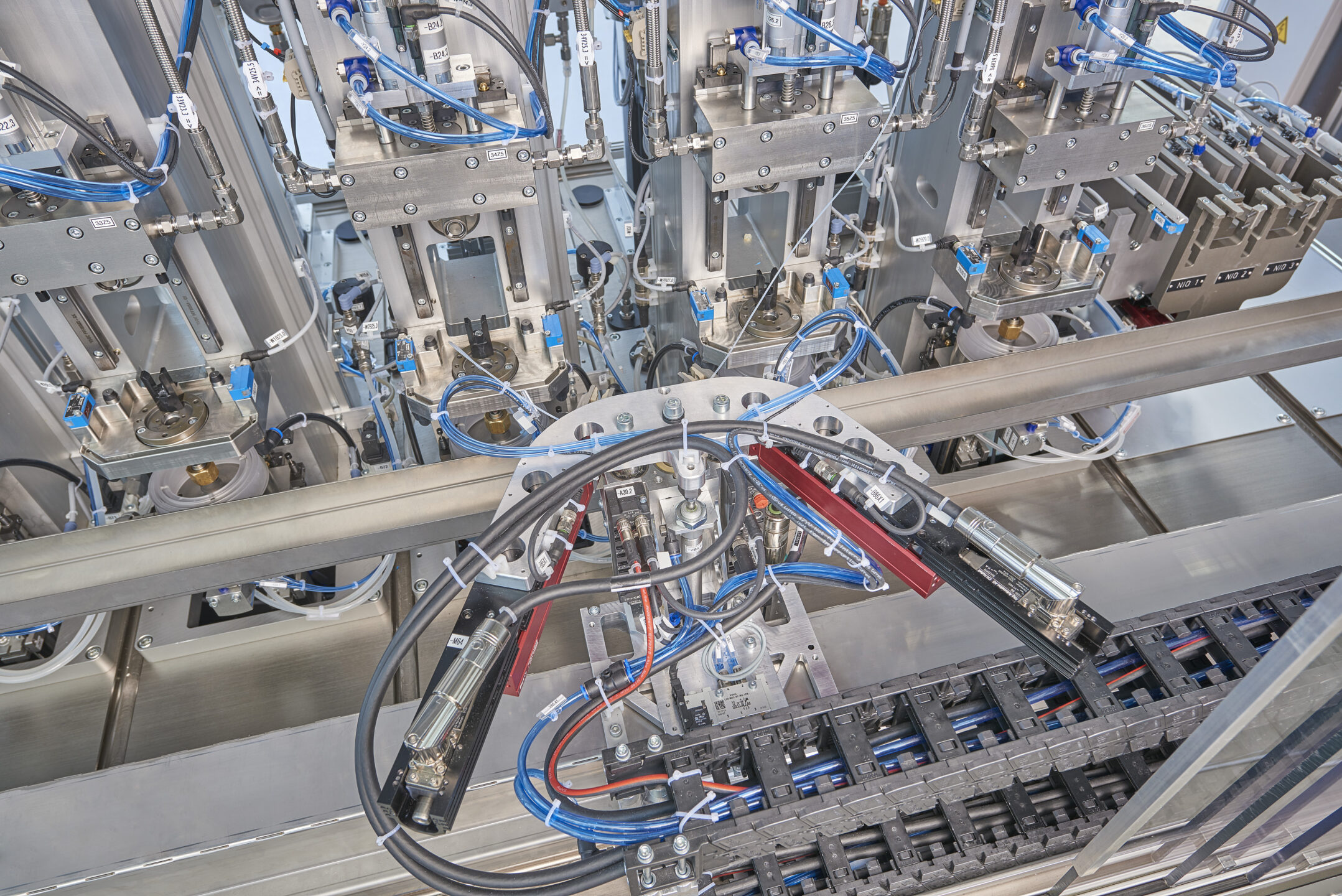
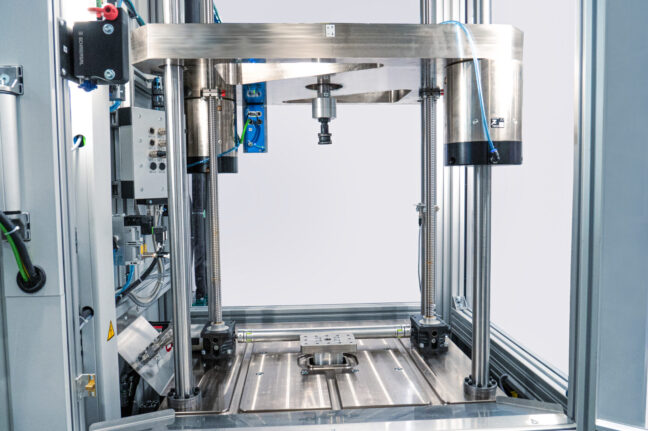
To analyze mechanical properties and dynamic effects, we integrate various testing methods into our systems:
- Force-displacement testing / haptic testing: Used to determine parameters such as opening forces, spring characteristics, or haptic properties.
- Vibration measurement: Vibrations act both as a load on components and as a source of noise emissions. Using contact and non-contact measurement systems combined with advanced analysis methods, vibration behavior can be precisely recorded and evaluated.
- Noise measurement: Noise emissions are a key quality criterion, especially for automotive components. Using established acoustic measurement methods, including laser vibrometer-based techniques, we capture both airborne and structure-borne sound and assess the acoustic performance of components.
