
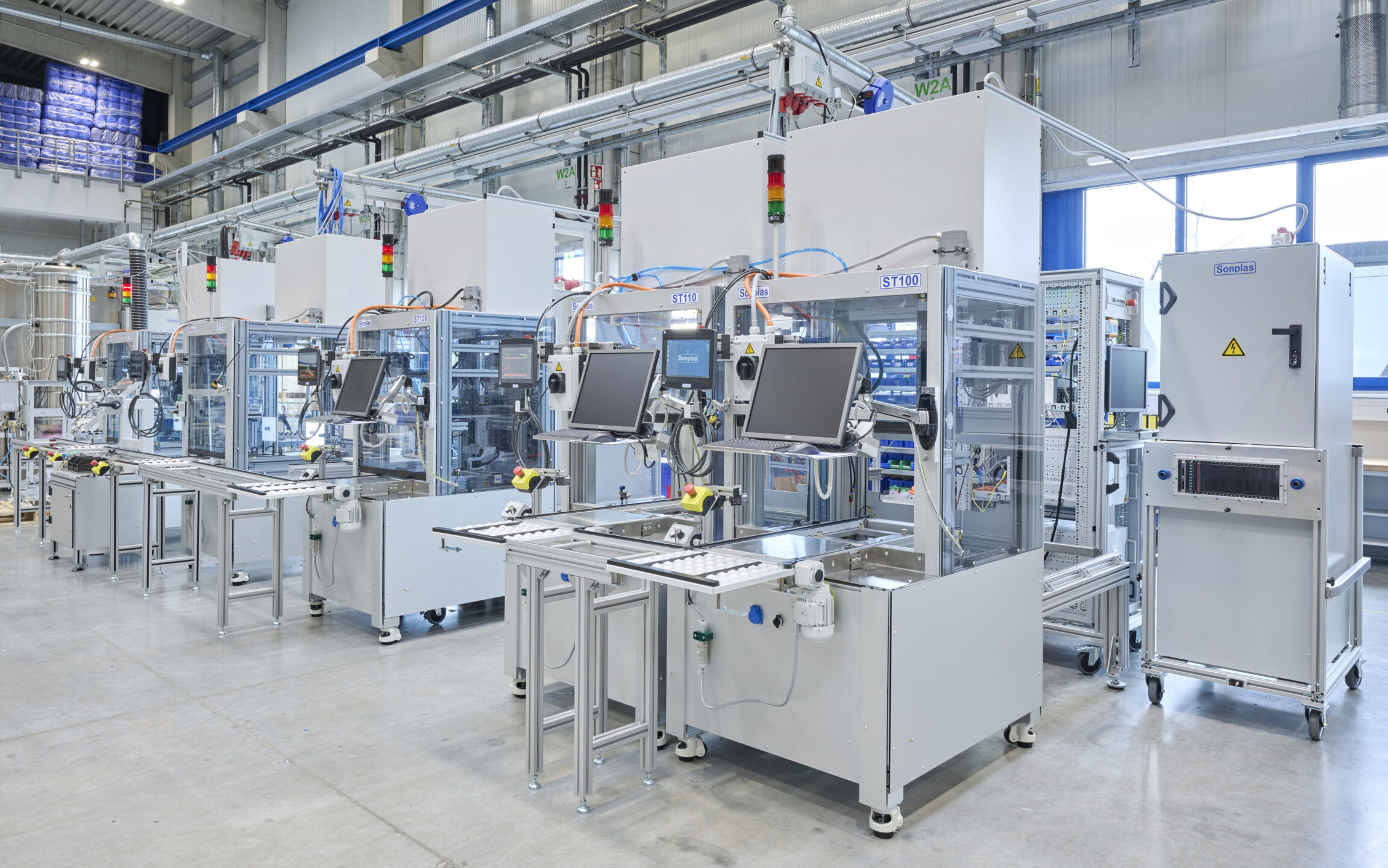
Our Assembly and Testing Solutions for Power Electronics and Batteries

Efficient power electronics start with the right production solution.
We develop systems for the precise assembly and testing of demanding electronic components.
Power electronics control energy flows within the electric drivetrain and are crucial for efficiency, performance and system stability. Components such as inverters, DC/DC converters or on-board chargers must operate reliably under high voltages and currents and be tested safely.
We develop assembly and test systems for power electronics, tailored to product design, testing requirements and the required level of automation. With our end-to-end engineering and process expertise, we support your project from the prototype phase through to the fully automated production line.
Assembly and test systems for power electronics – from prototype to series production
Assembly systems, including for inverters, DC/DC converters and on-board chargers
Integrated test systems for reproducible quality
End-of-line test systems for power electronics with modular design
Safe launch and high-voltage testing
Over 30 years of experience in test system engineering
In-depth development and process expertise in power electronics


Already interested?
Paul Birkeneder and Anton Lettl: “Let’s talk about your project!”
Contact us without obligation and tell us about your requirements. Together, we will develop the right solution—technically sound and precisely tailored to your needs.
Contact us!
Why Sonplas
is your ideal partner for power electronics
Assembly and testing from a single source
We integrate assembly and testing processes into end-to-end system solutions. With a proven network of selected and reliable partners, you receive a complete package with a single point of contact. This reduces interfaces, shortens coordination paths and ensures clear responsibilities – from planning through to commissioning.
Solutions from prototype to series production
Our solutions range from prototype builds to fully automated production systems. As a special-purpose machine builder, we deliver assembly and test systems tailored to your specific requirements, typically with cycle times between 20 and 300 seconds..
Experience in power electronics
Our experience in electronics manufacturing directly feeds into process design. In our in-house electronics laboratory, we develop and test power components and consider typical requirements already in the concept phase. Our team of experts knows exactly what matters in power electronics.
Broad portfolio of processes
Depending on your project requirements, we draw on our broad portfolio of proven and, in some cases, patented processes – or develop custom processes together with you as a tailored solution for power electronics. We have successfully implemented all core processes multiple times and, based on our project experience, ensure an efficient project start and execution.
Support for prototype development and process optimization
If you do not have the required equipment to test prototypes yourself, our electronics test team and in-house laboratory provide the necessary systems as well as the required software and hardware expertise. In addition, we work with you to develop practical solutions for the required power electronics processes. Existing processes can be optimized as needed to reduce your production costs.
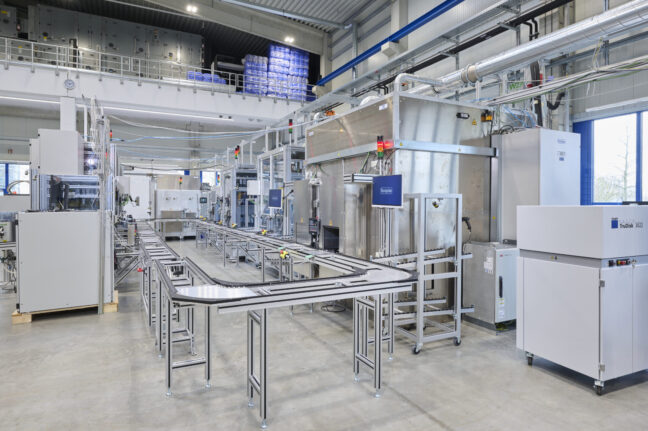
How can we support you with our assembly solutions in power electronics?
For the assembly of power electronics, we develop customer-specific system solutions – from prototype builds to series production. From the very beginning, we take into account all your requirements, such as product design, testing specifications and the desired level of automation.
Our systems typically achieve cycle times between 20 and 300 seconds, depending on component complexity and production volume. Shorter or longer cycle times can also be realized as required.
From planning and development through to implementation, we take full project responsibility. As an experienced partner in power electronics, we support you from the initial concept through to series production.
Would you like to learn more about our inverter assembly?
In the video, we show the individual process steps in detail.
You are currently viewing a placeholder content from YouTube. To access the actual content, click the button below. Please note that doing so will share data with third-party providers.
More Information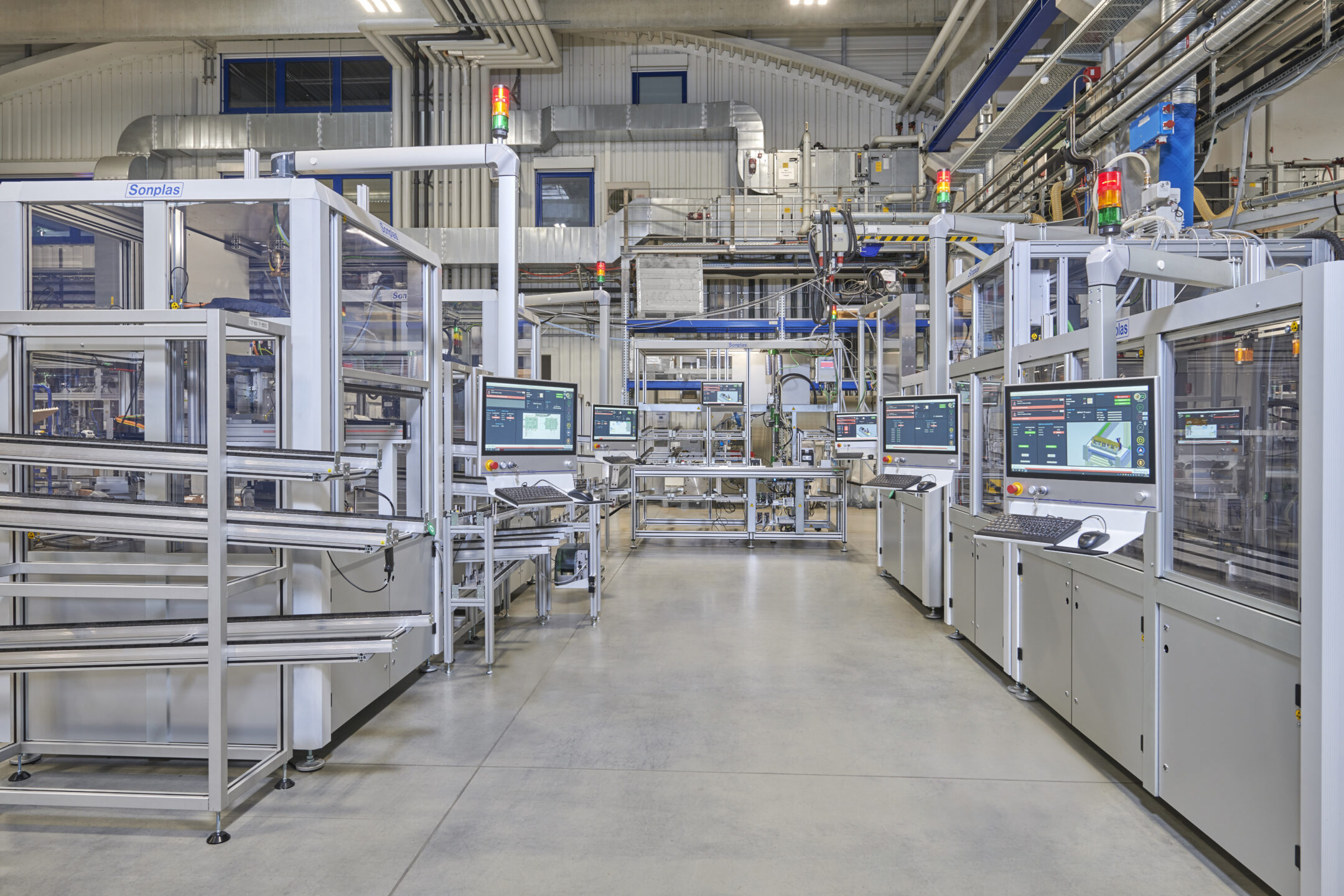
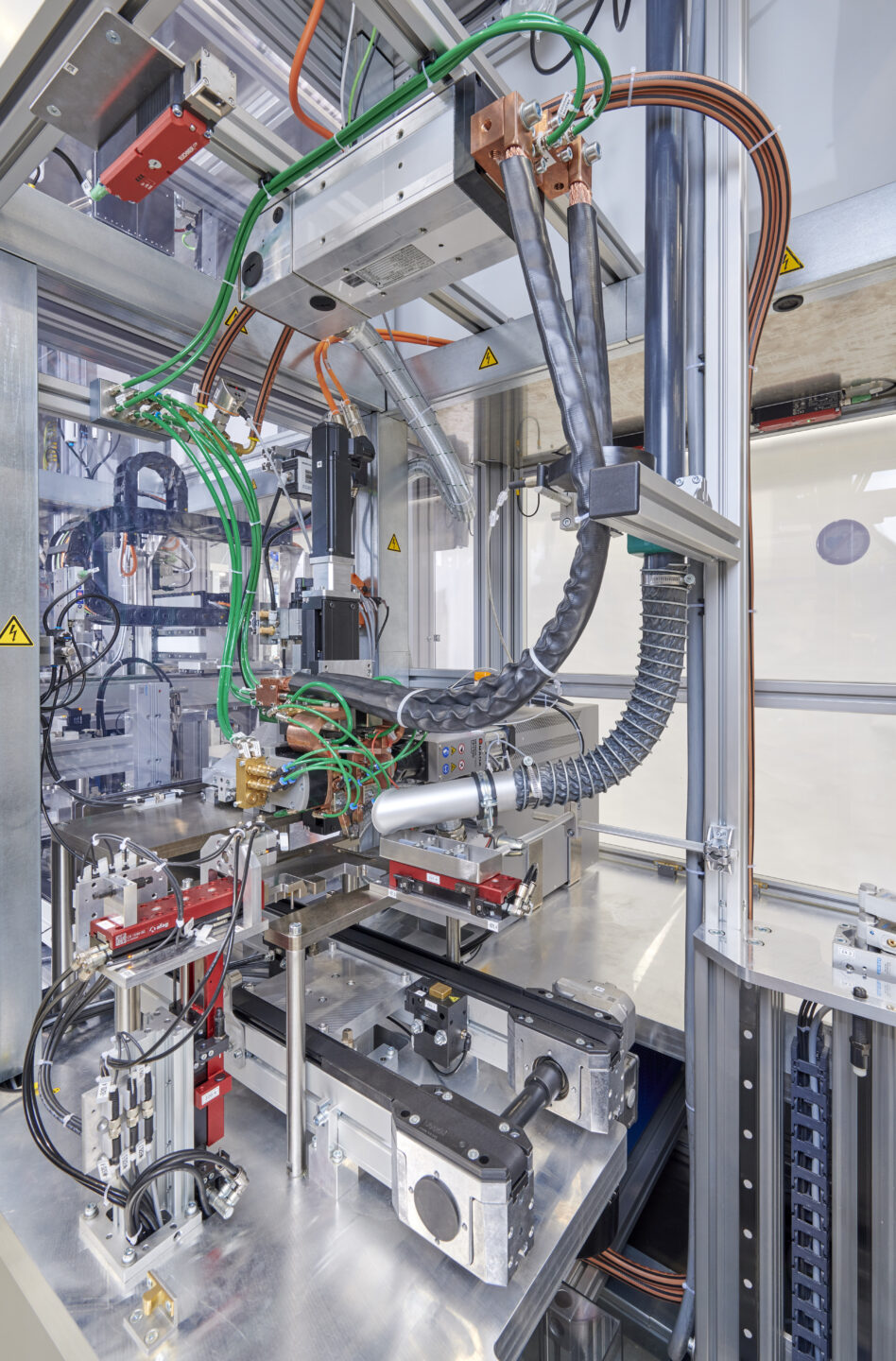
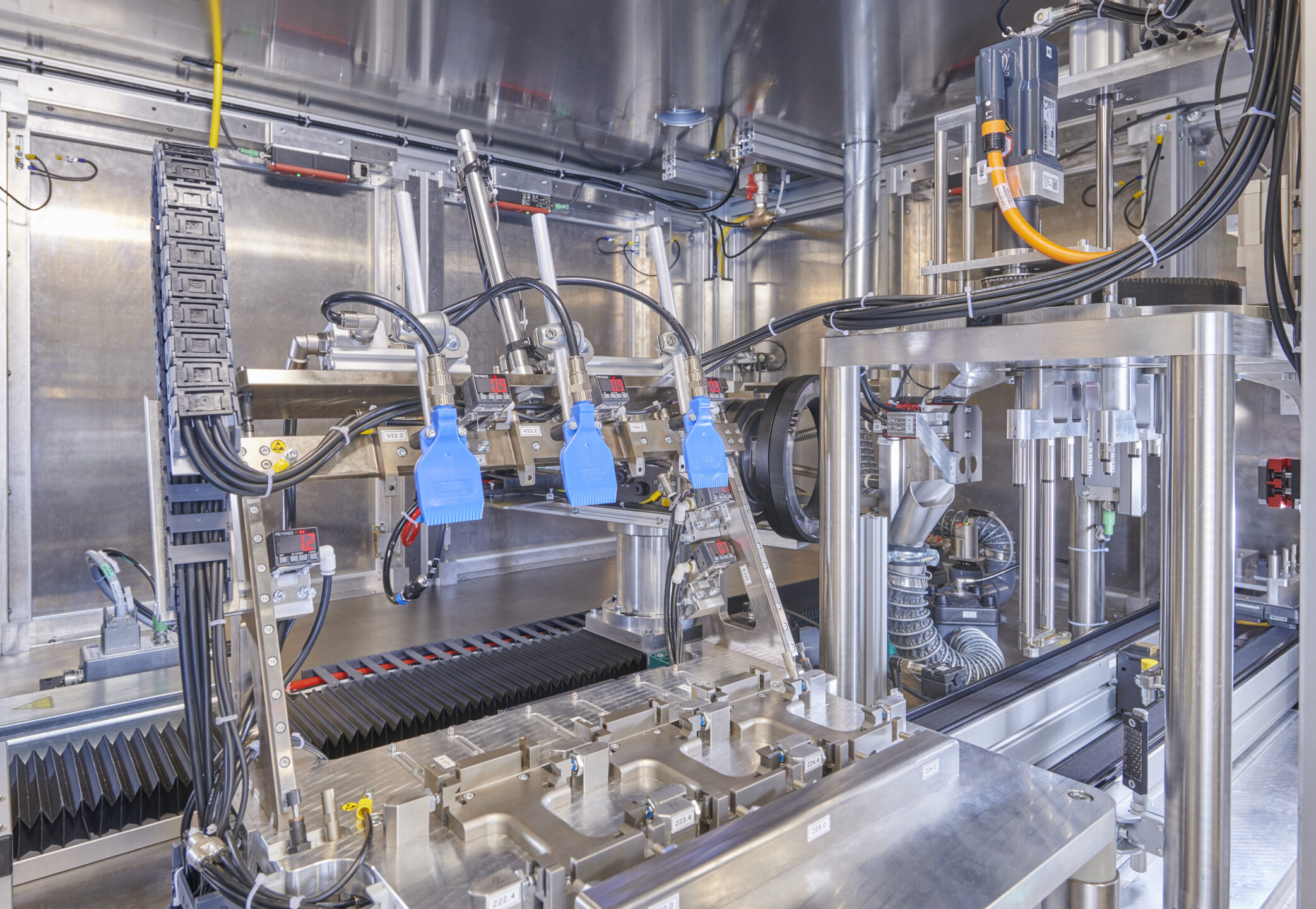
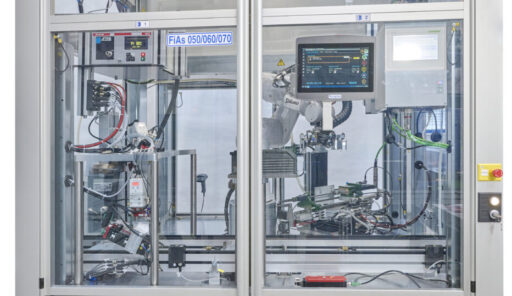
Left: Assembly HV EMC filters
Center: Brazing
Right: Copper welding
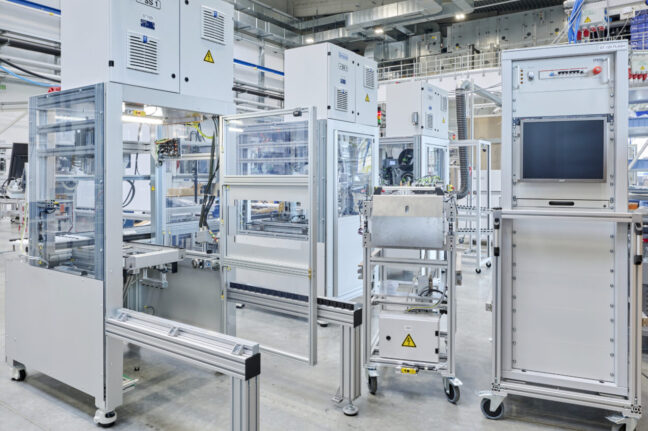
Test technology for power electronics: How do we ensure quality and reproducibility?
Power electronics components must not only be assembled efficiently, but also tested safely and reproducibly. With our experience in testing complex systems, we develop solutions that meet exactly these requirements.
Our test systems perform, among other things, functional and leak testing, calibration as well as cold and hot testing under realistic conditions. Even before the final hardware is available, you can simulate and optimize test concepts – saving time and providing confidence.
Through close collaboration with you, we identify optimization potential at an early stage. Fault analysis and adjustments are carried out in our in-house laboratory without affecting ongoing production processes.
A special focus lies on our in-house developed contacting systems. They ensure precise, low-wear connections in end-of-line testing and make a significant contribution to measurement stability.
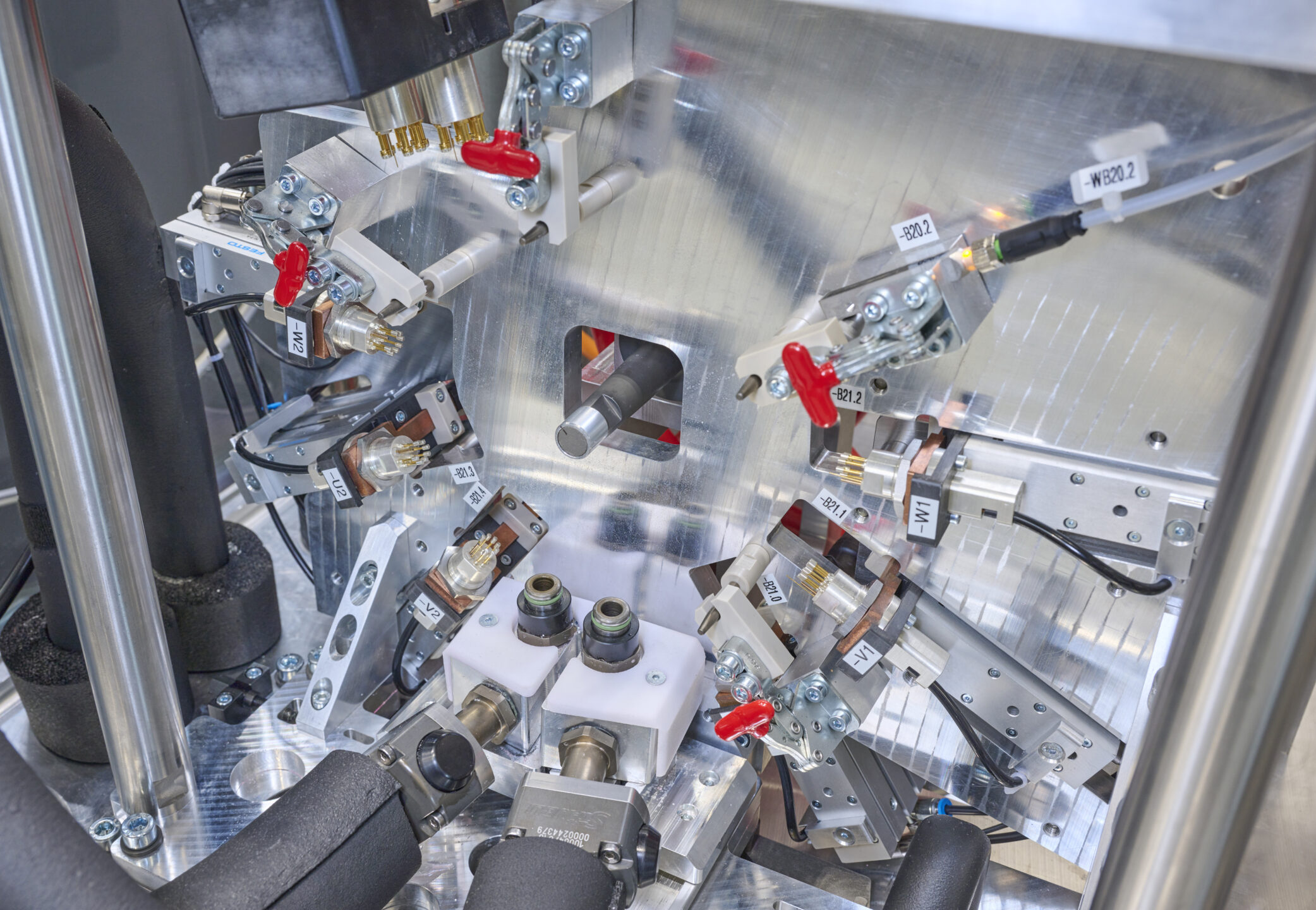
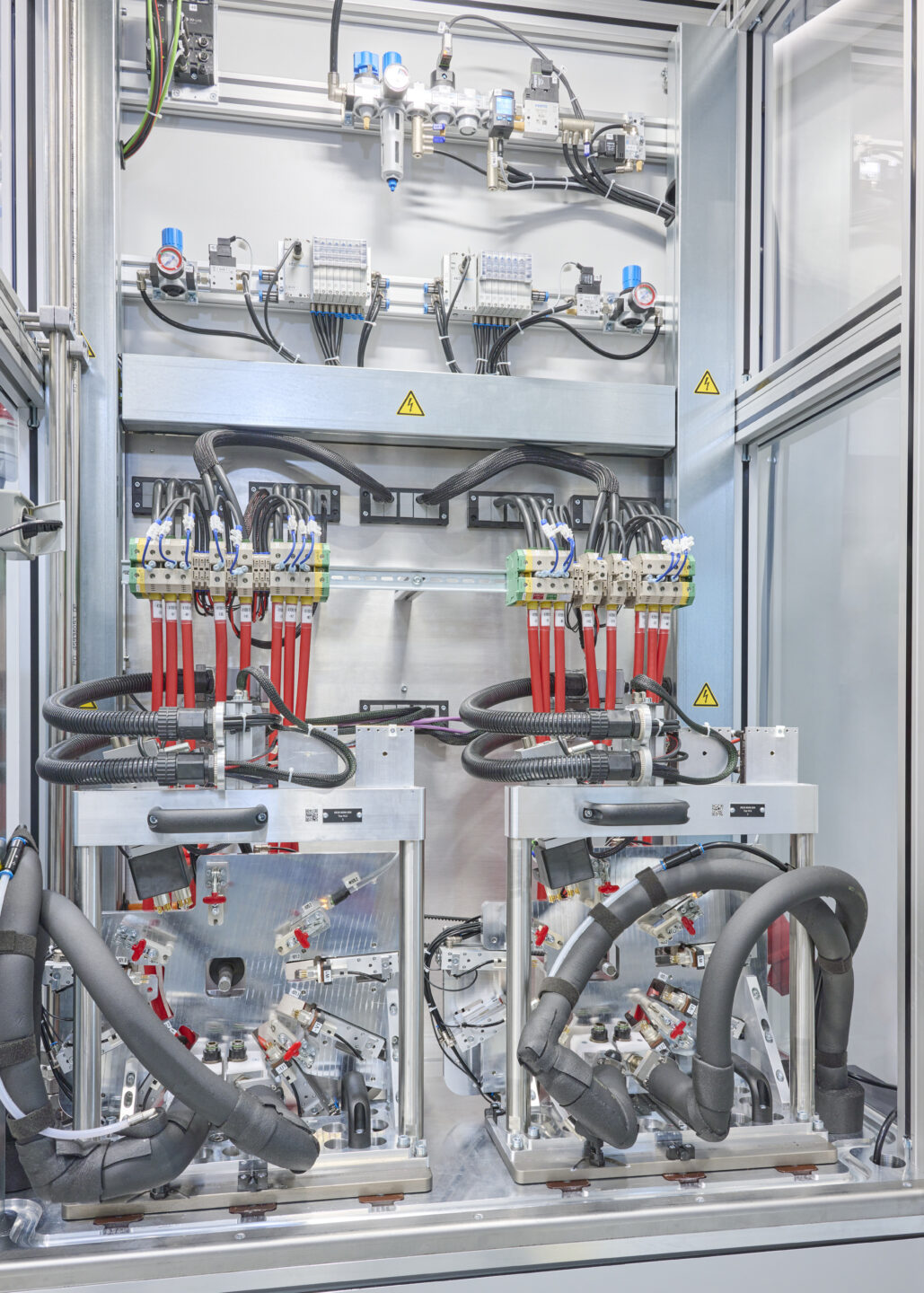
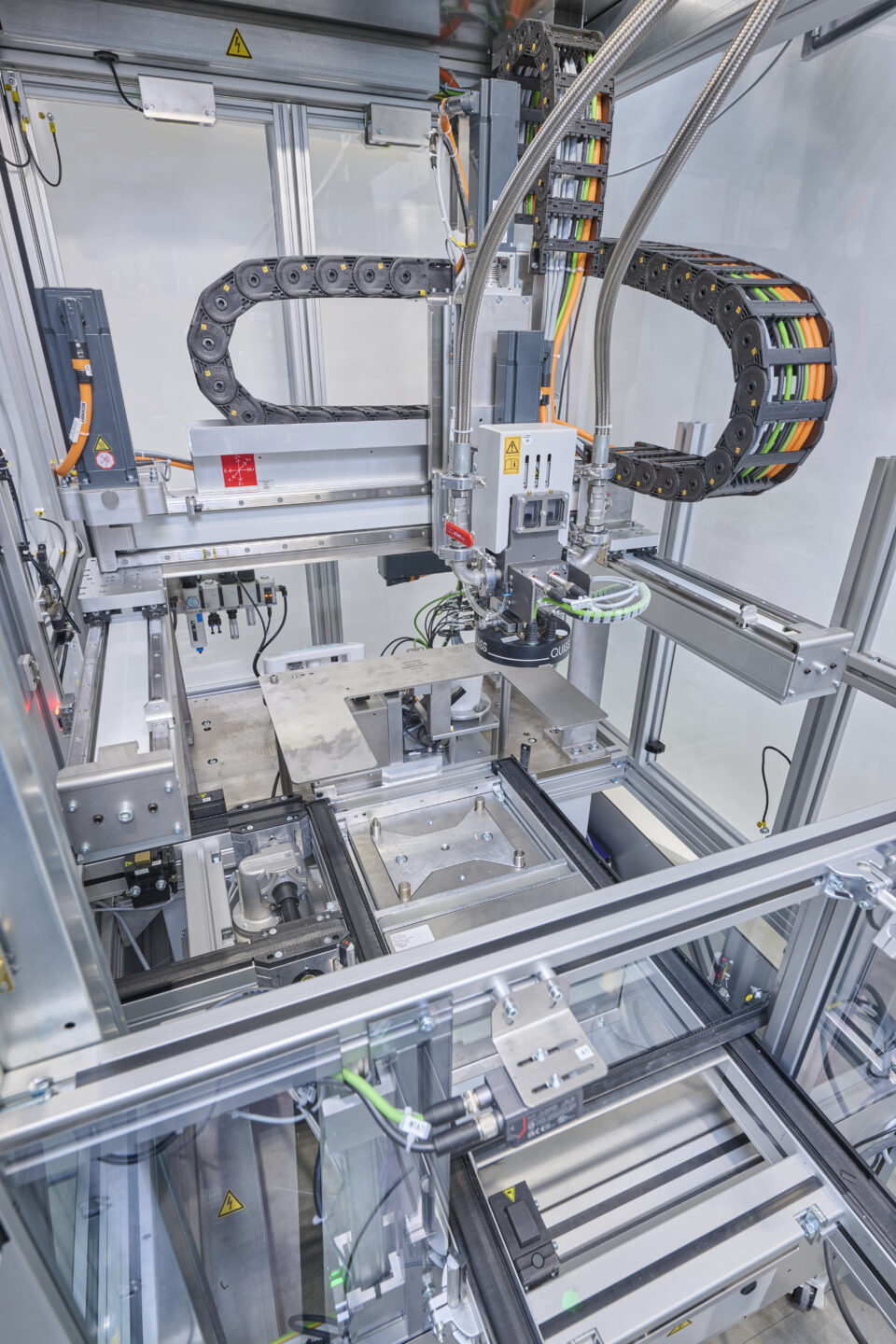
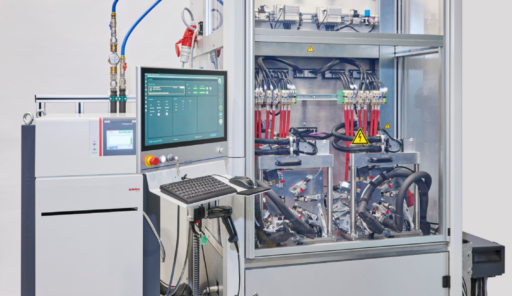
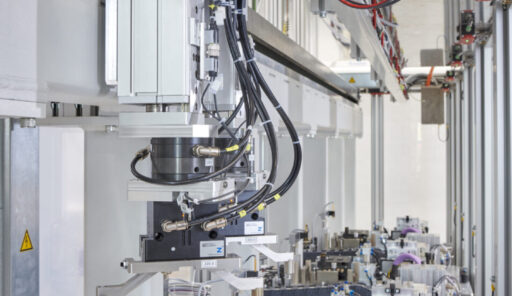
Left: In-house developed contacting systems
Center: Inverter test bench
Right: Camera inspection
With our proven expertise in power electronics, we develop and implement customized solutions for assembly and testing.
Power electronics in electric and hybrid vehicles are constantly evolving. To remain competitive, manufacturers need systems that enable inverters, on-board chargers and DC/DC converters not only to be assembled efficiently, but also to be tested reliably and consistently. Alexander Denk from Sonplas explains how this is achieved in practice.

Expert interview with
Alexander Denk
Team leader electrical design at Sonplas
Mr. Denk, what does “power electronics” refer to in the context of electric vehicles?
Alexander Denk: Power electronics control the entire drivetrain of an electric vehicle. They consist of three main components – the first is the inverter, which converts the battery’s DC voltage into AC voltage for the motor. The second component is the AC charger, or more precisely the charging unit. When charging via a socket or wallbox, AC current is supplied, which this unit converts into DC to charge the battery. The third component is the DC/DC converter, which, for example, supplies the 12 V on-board electrical system.
What challenges are involved in power electronics for electric vehicles for manufacturers, original equipment manufacturers (OEM) and first-tier suppliers?
Alexander Denk: These components are highly complex assemblies. Power electronics are a key technology for the successful transformation of the automotive industry. At the same time, innovation cycles are becoming increasingly shorter. This drives efficiency while reducing power losses – and companies must be able to adapt to these changes.
What advice do you have for decision-makers at manufacturing companies, original equipment manufacturers (OEM) and first-tier suppliers in the sector of power electronics for electric vehicles?
Alexander Denk: A collaboration with Sonplas, of course (laughs). But seriously, we provide assembly and test systems specifically for this sector. For example, we plan and implement line concepts ranging from prototype builds to fully automated production systems, with typical cycle times between 20 and 300 seconds for applications such as inverters, converters or on-board chargers. These systems are designed to handle typical workpieces weighing between 2 and 25 kilograms.
So ready-made systems for manufacturing power electronics for electric cars?
Alexander Denk: It depends. Depending on the project requirements, our experts either draw on a broad portfolio of proven and, in some cases, patented processes – or develop custom workflows together with the customer as a tailored solution. This can significantly reduce production costs. Thanks to our extensive experience in electronics manufacturing, we also develop and build power stages in our own laboratory. And of course, we support prototype development if companies do not have the necessary equipment to produce them in-house.
And then, they can test components for the power electronics of electric vehicles?
Alexander Denk: Exactly. The key is to tailor each process precisely to the specific requirements. For manufacturers, however, this often involves significant effort. In addition, most suppliers of assembly systems do not offer testing themselves – either due to a lack of expertise or because they do not have the necessary equipment to fully cover the required tests. We have built up extensive know-how in this area within a short time and can now demonstrate several highly successful references. Customers trust our specialists – their experience, their comprehensive consulting and their assessments. This provides clear added value, as we offer a high level of confidence, especially during often uncertain development phases.
What kind of tests does Sonplas offer for the power electronics of electric vehicles?
Alexander Denk: An important segment of our portfolio is end-of-line (EOL) test systems. A key feature of these systems is their modular design, allowing them to be flexibly adapted to individual requirements. Depending on the application and the specific test scope, our experts configure the appropriate modules from a modular system. For different product types, customers receive a base machine with the corresponding test adapter, resulting in significant cost savings.
What aspects of the power electronics can I test with the individual modules?
Alexander Denk: Depending on requirements, the system can perform leak testing – typically using air – or handle flashing to apply calibration data or install the operating system. In addition, the test station enables customers to verify communication, for example via CAN or Ethernet. Ultimately, the system allows measurement and calculation of currents, power and efficiency, as well as indirect speed determination.
EOL test systems for power electronics in electric vehicles are one sector. What other areas does Sonplas cover in its portfolio?
Alexander Denk: We also provide manufacturers with reliable solutions for safe launch tests, as well as for cold and hot testing of PCBs and complete assemblies. To ensure that electric and hybrid vehicles operate with maximum efficiency, not only the electric motor and battery must be kept within an optimal temperature range, but also the power electronics. With our systems, tests can be performed in temperature ranges from -40 to +90 degrees Celsius. In addition, they are capable of simulating various environmental conditions, for example using our in-house developed and certified thermal chamber. Long-term tests prior to planned series production can also be implemented, allowing products to be tested even more intensively.
Isn’t testing power electronics dangerous?
Alexander Denk: That depends on the test system and the specific application. Electric vehicles have two on-board electrical systems – the high-voltage system for the drivetrain and the low-voltage system for vehicle electronics such as radio, lighting, windshield wipers or cruise control. A high-voltage battery is used, which supplies the 12 V battery for the vehicle electronics via a converter. The voltage levels have increased significantly over time – from around 48 volts in the early days to 800 volts today, with a trend towards 1,200 volts. As power demands continue to rise at the same current levels, systems must be able to safely handle these high and increasing voltages. Many tests are performed directly on live components of the power electronics. Therefore, once testing is completed, it must be ensured that the test specimen is no longer energized when the operator opens the safety door – otherwise this could pose a serious safety risk.
What does Sonplas do in order to minimise the risks of using their power electronics testing systems?
Alexander Denk: We provide a comprehensive safety concept that addresses potential hazards and minimizes risks. This starts with the selection of suitable installation materials such as cables, terminals and other components. Our systems safely handle all voltage levels, as well as peak currents exceeding 800 amps and the corresponding high power levels.
What would you say makes Sonplas superior in the power electronics sector?
Alexander Denk: We offer assembly and testing from a single source, efficiently combining both disciplines within our solutions. Thanks to our proven network of selected and reliable partners, customers receive a complete package with a single point of contact. This shortens coordination paths, reduces organizational effort and avoids interface issues. We also provide training for our customers on our systems. In addition, our modular design allows test systems to be flexibly adapted to increasing requirements or changing products.
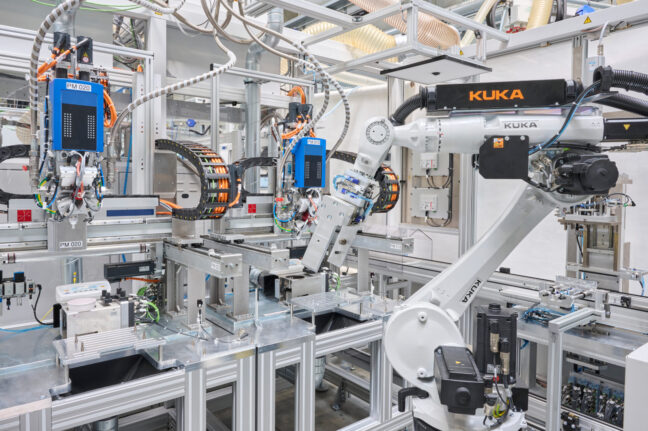
Battery systems: Which solutions do we offer along the value chain?
For battery production, we develop solutions along the entire value chain. In laser cutting of cathode and anode materials, our systems enable precise notching, slitting and singulation processes with clean, burr-free cut edges. Integration into existing lines is flexible and process-reliable.
In addition, we implement scalable systems for the precise assembly of battery modules and packs.
With our test systems, you can ensure the quality of cells, modules and packs – from production-integrated end-of-line testing to performance, safety and endurance tests.
This is how we support you in developing high-performance and economically viable battery systems.
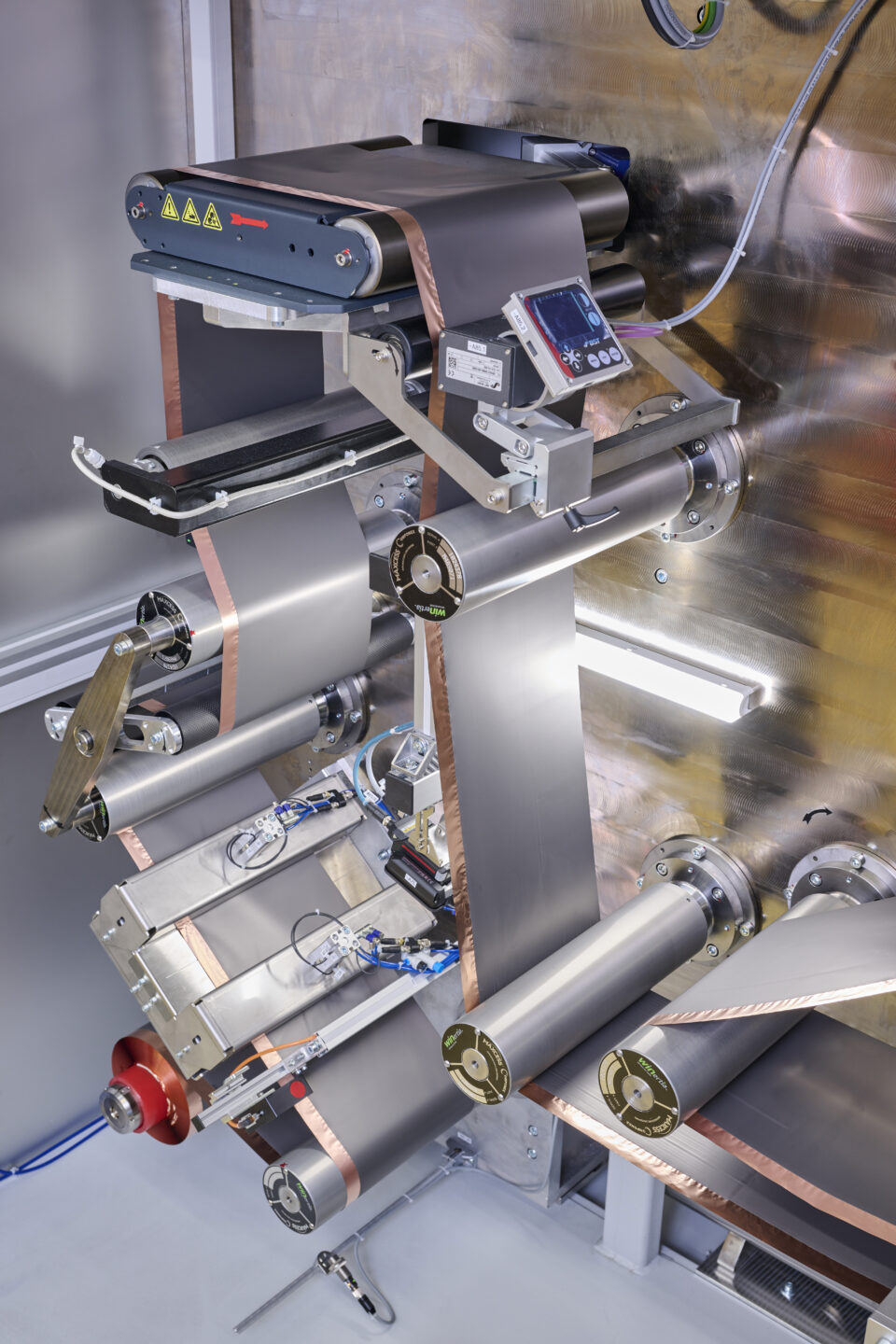
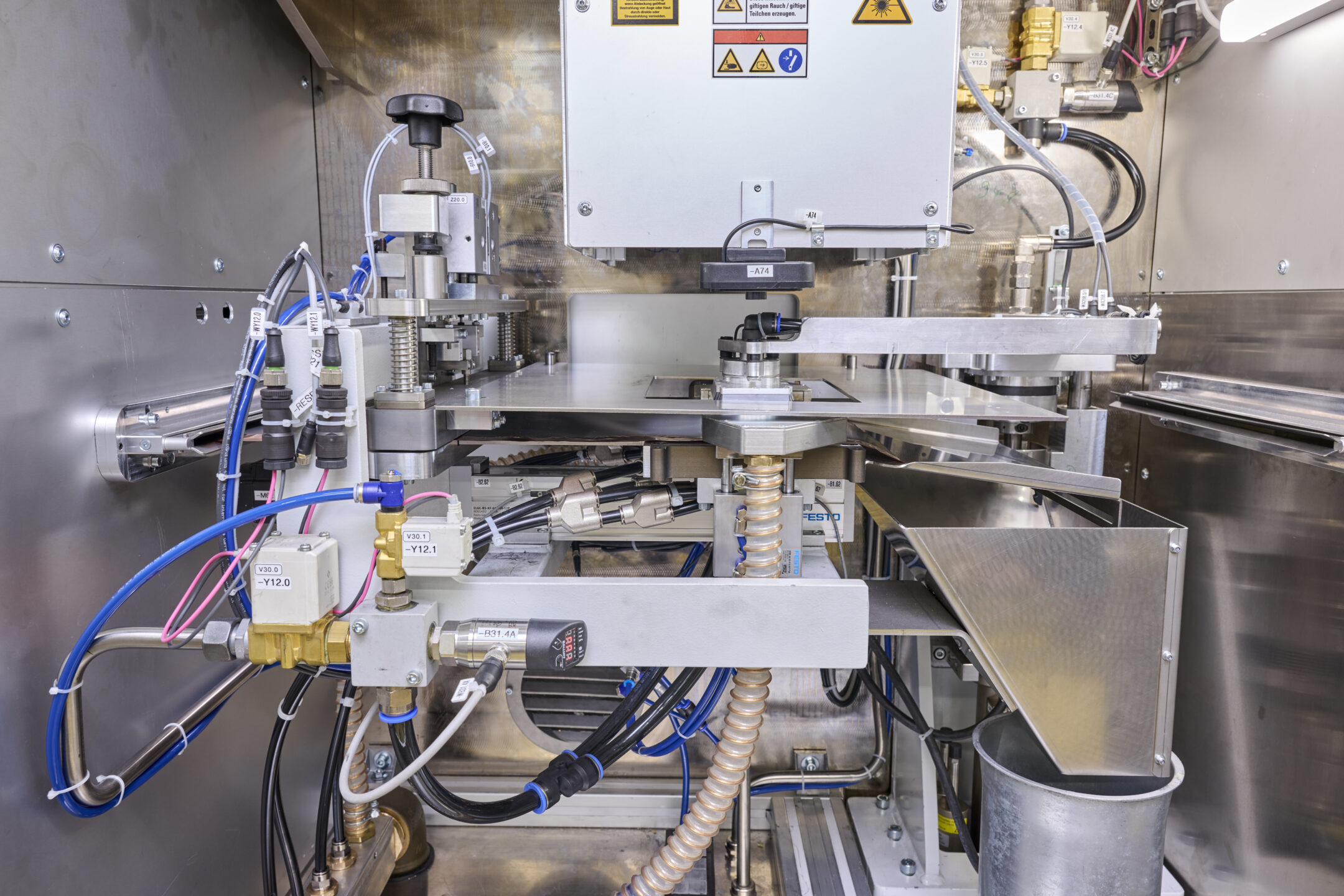
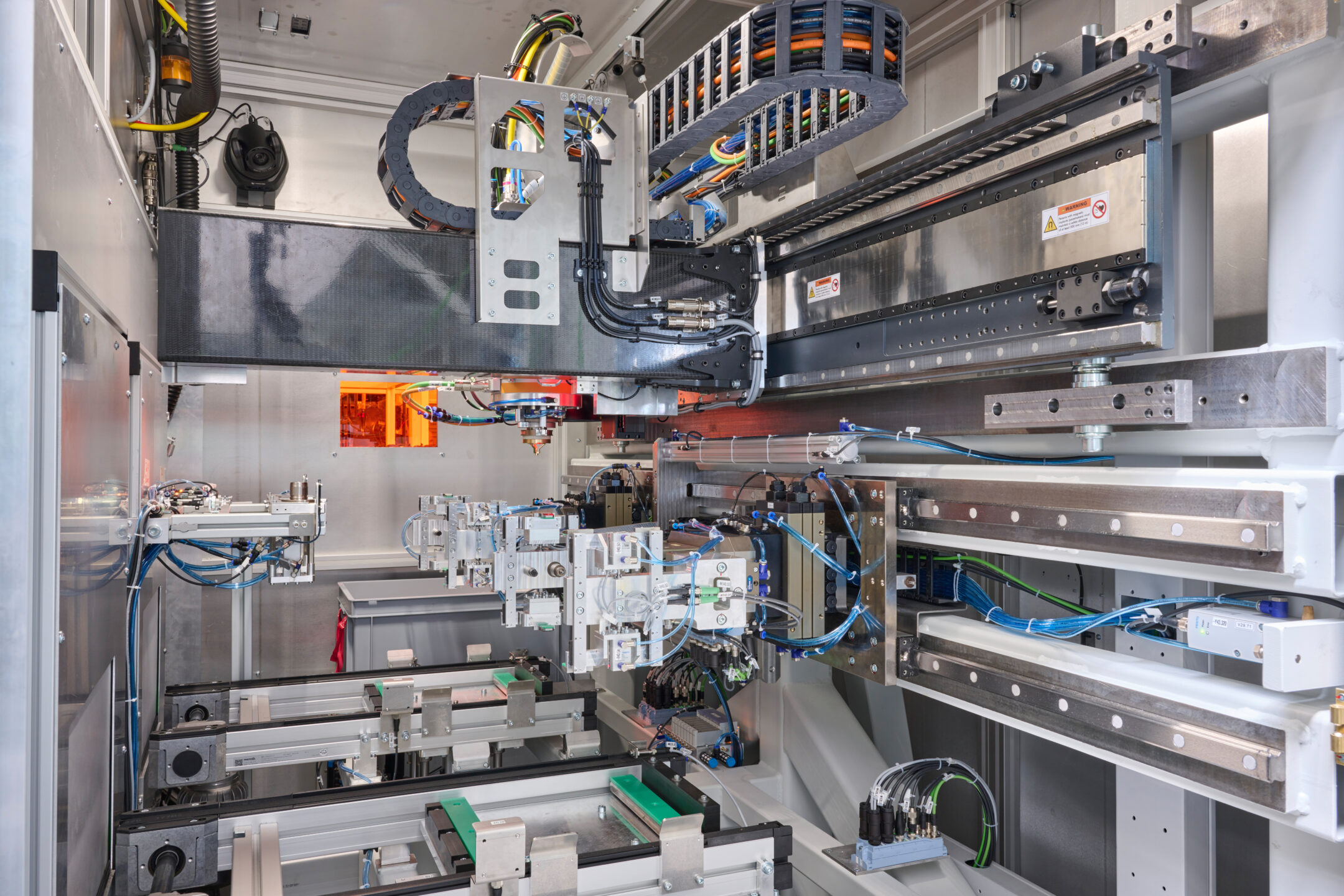
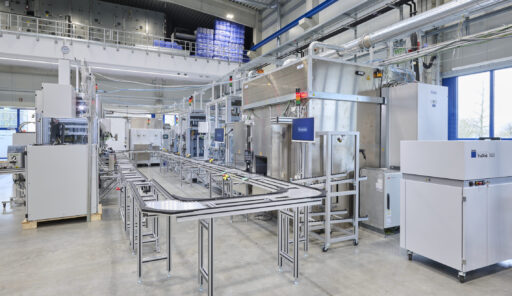
Left: Unwinder lasernotcher
Center: Laser chamber
Right: Battery module assembly
Do you have any questions? Contact us.



Our references
Solutions that speak for themselves
We understand what drive our customers
Frequently asked questions about power electronics
Thanks to our many years of experience and numerous successful projects we understand what drives you!
We need a partner who truly understands power electronics in detail. Does Sonplas have this expertise?
Yes. With our dedicated electronics test team and in-house electronics laboratory, we have strong development expertise in power electronics. In addition to test systems, we also develop contacting systems, PCBs and controller boards for our equipment in-house. This results in end-to-end test concepts that holistically integrate both technology and test architecture.
We are looking for an experienced partner for test systems in power electronics. How much experience does Sonplas have in this field?
We have been active in the field of electromobility for over 15 years and bring more than 30 years of experience in test system engineering. During this time, we have implemented numerous test systems for power electronics, inverters and control units – both for development projects and series production. This makes us a reliable partner in test system engineering.
This combination of long-standing experience and up-to-date technological expertise enables the safe and efficient design of complex test concepts.
Our testing processes are highly diverse. Can different test methods be efficiently integrated within a limited space?
Yes, this can be implemented efficiently within a limited space – and it is exactly what we do every day in our own electronics laboratory. Our lab test system combines a wide range of testing processes within a very compact footprint, including electrical functional tests, high-voltage and insulation tests, as well as complex test sequences.
Because we use this environment in-house, we can develop, test and optimize software, test procedures and interfaces even before the actual system is built. This shortens lead times, enables flexible adjustments and ensures that your production test systems run reliably and efficiently from the very beginning.
