
Testing Under Real-World Conditions
DILO Chooses Sonplas’ Modular H₂ Test Container
Hydrogen presents unique challenges for test systems. Test environments must be highly reliable and flexible while accurately replicating real-world conditions. DILO Hydrogen needed a robust testing infrastructure designed to meet stringent safety requirements and conduct development and validation testing—including for refueling systems and mobile applications—under controlled, repeatable conditions. Together with Sonplas, DILO developed a modular H₂ test container that meets these requirements. The solution enables faster validation of new systems and helps shorten development cycles.
Hydrogen will play a key role in future energy technologies, but its physical properties push conventional test systems to their limits. “Its small molecular size, high diffusivity, and the resulting safety requirements demand solutions that operate with exceptional reliability,” explains Ulrike Garanin, Managing Director of DILO Hydrogen GmbH. DILO Hydrogen is a subsidiary of DILO Armaturen und Anlagen GmbH, headquartered in Babenhausen in Bavaria’s Unterallgäu district. For decades, the Babenhausen-based company has built extensive expertise in the precise handling of technical gases—particularly in applications where leak-tightness, purity, and controlled processes are critical. Today, DILO is bringing this proven expertise to hydrogen technology.
Under the DILO Hydrogen brand, the group brings together its activities supporting the H₂ value chain. Rather than focusing on hydrogen production itself, DILO Hydrogen specializes in the supporting technologies and systems required for filling, commissioning, and maintaining H₂ systems, as well as for measurement and gas treatment. “In these areas in particular, safe handling, repeatable processes, and high quality standards are essential,” explains Ulrike Garanin.
To ensure reliable performance, these systems must be tested under real-world pressure and operating conditions. Sabrina Walther, Head of the H₂ Test and Validation Center at DILO Hydrogen GmbH, explains: “Development and validation testing must replicate the actual operating environment—including safety-critical scenarios.” Recognizing this need early on, DILO Hydrogen established its own flexible testing infrastructure, designed to deliver consistent, reproducible results.
Choosing the Right Development Partner
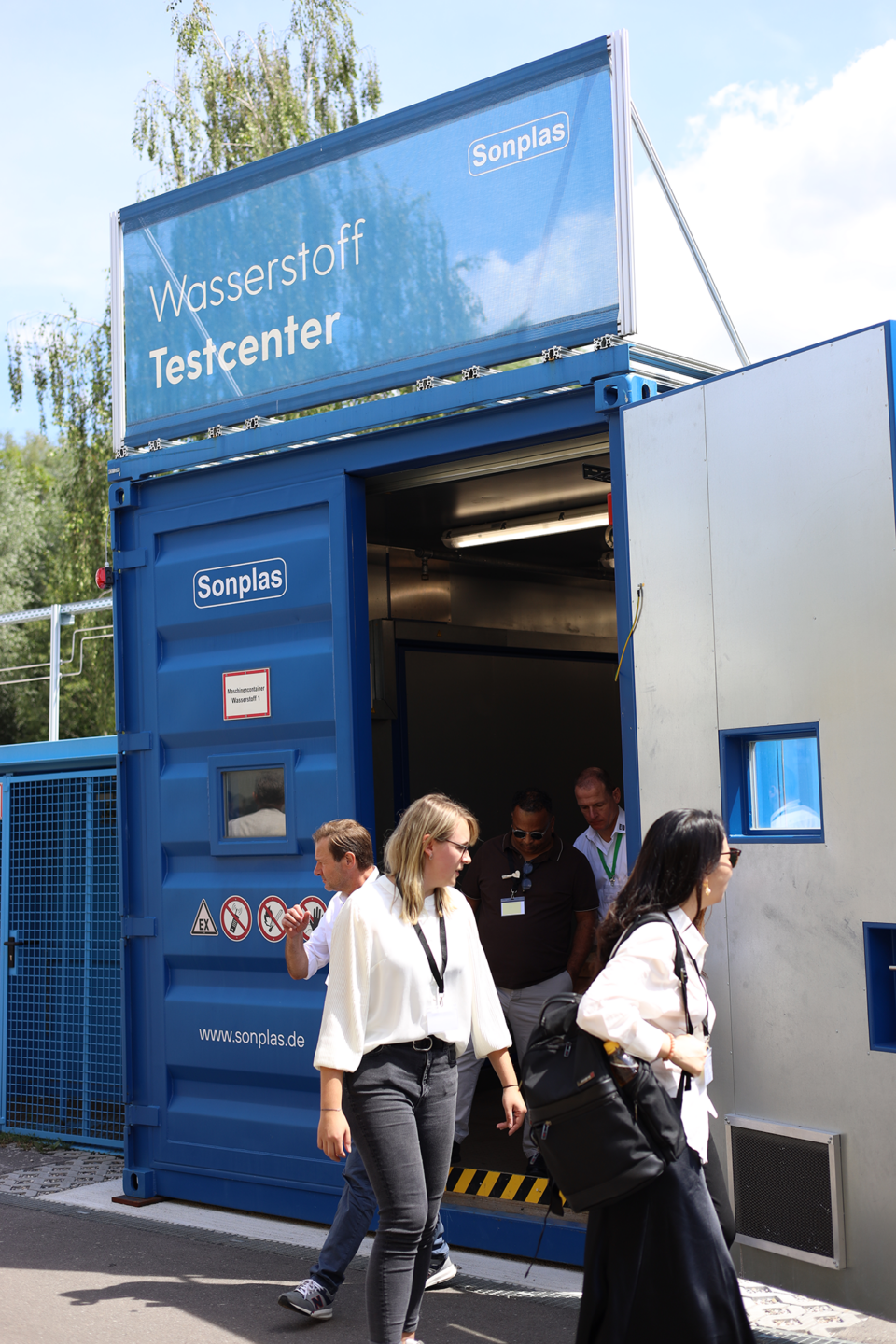
To bring the project to life, DILO needed a partner capable of developing a containerized hydrogen test lab tailored to its specific requirements. Sonplas proved to be the right fit—not least because both companies are members of the Hydrogen Alliance Bavaria, a key network for technology and knowledge transfer. Based in Straubing, Sonplas has extensive experience designing and building complex test lab infrastructure and operates its own hydrogen test center. “Their expertise and proven track record won us over,” says Sabrina Walther. Direct communication and a shared understanding of the challenges associated with modern H₂ technologies also helped ensure a smooth and productive collaboration. “Our task was to build on an existing concept and tailor it precisely to DILO’s requirements,” explains Werner Riederer, Fuel Technology Sales at Sonplas.
Safety and Regulatory Approval
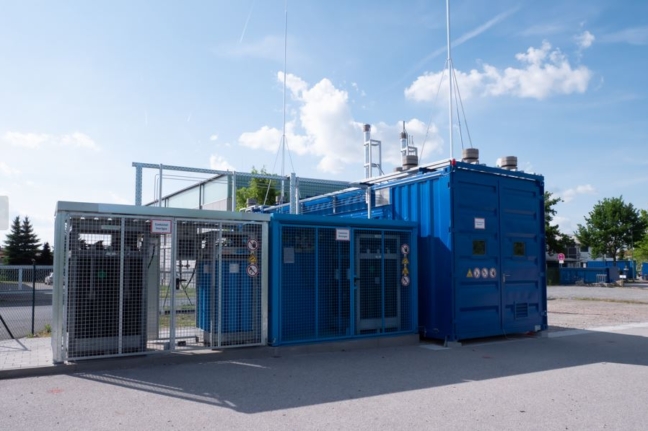
The test container is located within a secured area at DILO’s Babenhausen site, a key requirement identified in the company’s internal risk assessment. Sonplas developed the safety concept that served as the basis for the container’s technical design, taking into account the specific requirements of the site. The containerized solution also offers a significant advantage when it comes to regulatory requirements: only an installation-specific permit is required. A comparable indoor test system would have required far more extensive modifications, including ATEX zoning, ventilation and pressure-relief systems, and structural changes to the building. Suitable indoor space is also limited. By making efficient use of available outdoor space, the container significantly reduces implementation time.
Multi-Layer Safety Concept for Realistic H₂ Testing
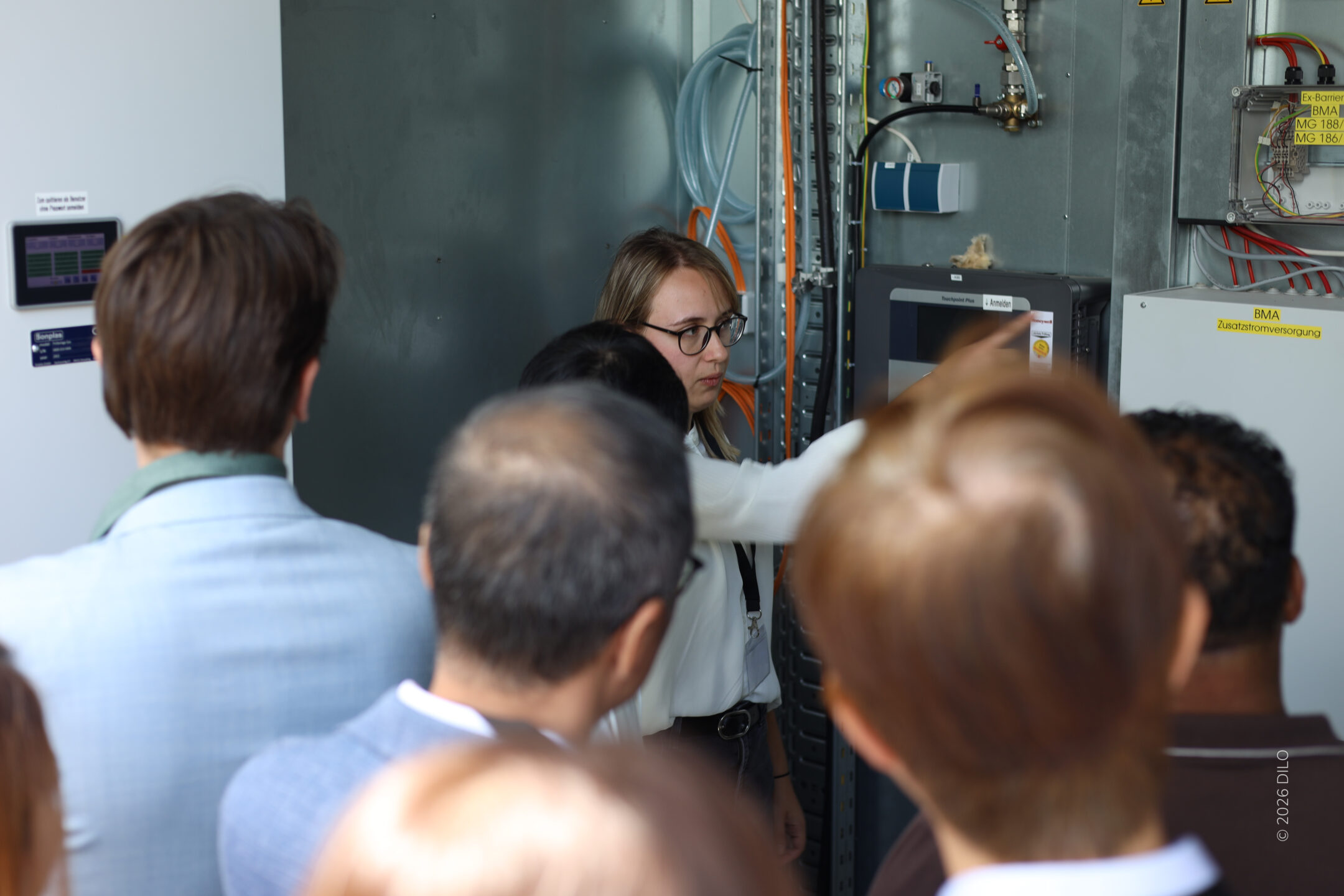
The solution is built around a comprehensive, multi-layer safety concept engineered specifically for hydrogen applications and high-pressure testing. Hydrogen and oxygen sensors continuously monitor the atmosphere inside the container. A high-performance ventilation system with a high air exchange rate prevents hazardous concentrations from developing. A two-stage alarm system—with pre-alarm and main alarm levels—enables an appropriate response even to minor deviations. Additional safeguards include an ATEX-compliant design and integrated pressure-relief, lightning-protection, and fire-protection systems. Together, these measures provide a controlled, protected environment for reliable testing and operation.
Sonplas delivered the container as a nearly turnkey module, minimizing the amount of work required on site. Technicians only needed to establish the utility connections and connect the external gas cylinder storage area. In parallel, the manufacturers of the safety-critical sensors commissioned and cleared their respective equipment for operation. Site-specific documentation and the required acceptance inspections completed the process to ensure compliant operation.
Flexible, Scalable, and Ready for the Future
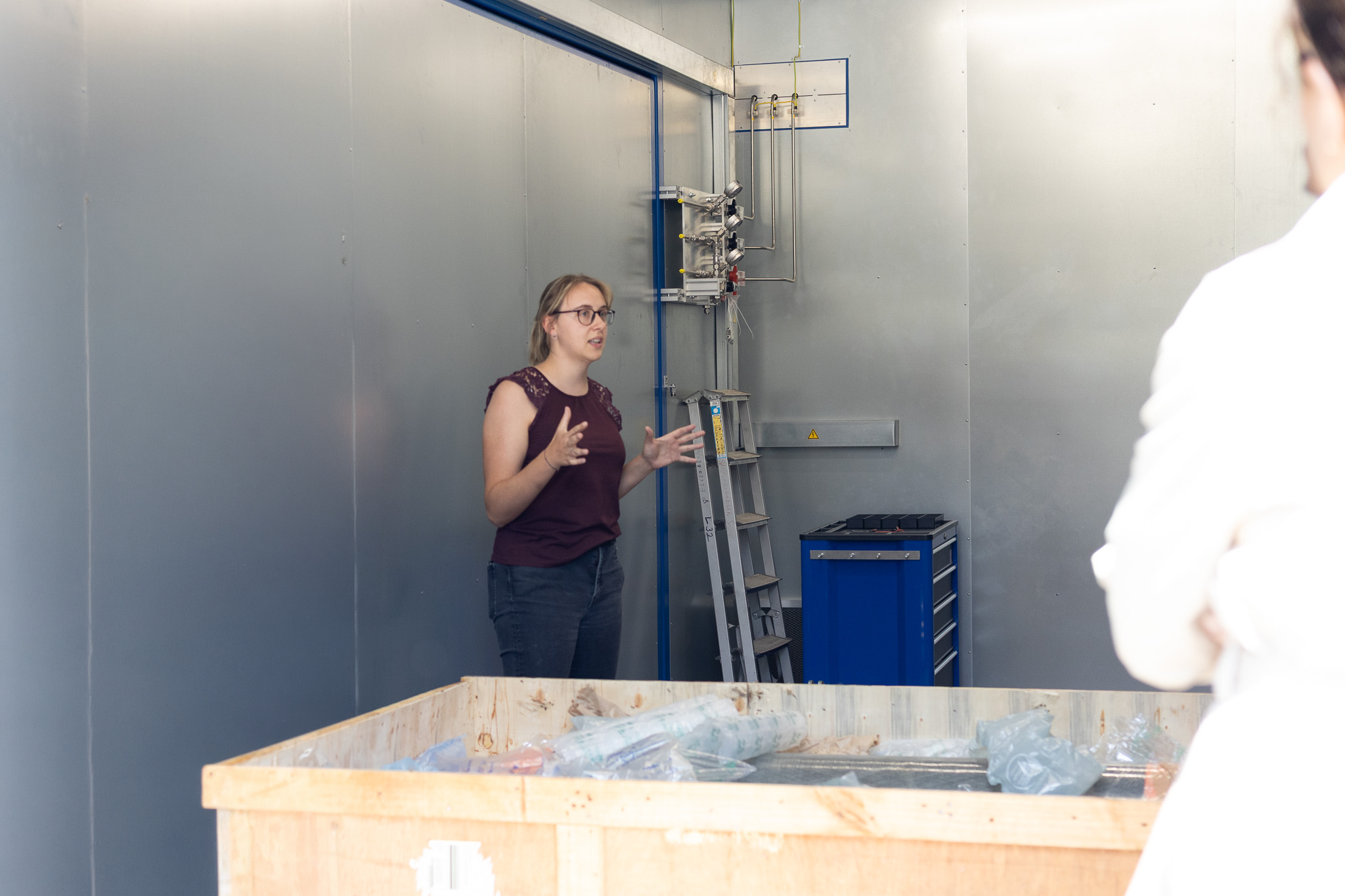
“Another key advantage of our solution is its flexibility,” says Werner Riederer. “The container can be relocated, expanded, or equipped with additional modules as needed. We designed both the hydrogen connections and the interior layout to accommodate evolving requirements.” The result is a scalable test platform that can grow with DILO’s hydrogen business while continuing to provide realistic testing conditions.
The test container supports DILO Hydrogen’s development activities and is also expected to be made available to external partners in the future. Current applications include an H₂ purging solution for internal combustion engines and a mobile hydrogen refueling station. While tank systems are not tested as standalone components, they are included in testing as part of larger integrated systems. “With the container, we have an environment where we can validate and further develop a wide range of H₂ components,” says Sabrina Walther. Rather than recirculating the test medium, the focus is on safe handling and controlled venting. The container developed by Sonplas features a comprehensive safety and ventilation system designed to quickly and safely vent hydrogen to the atmosphere during testing or in the event of a fault.
Data Acquisition Integrated into the Test Systems
The container’s two-part design provides dedicated entry points for cables and utility lines, while data acquisition is fully integrated into DILO Hydrogen’s automated test systems, which can be operated remotely. All measurement and test data is transmitted directly to the DILO network for centralized documentation.
“Our collaboration with Sonplas was close, constructive, and efficient,” says Sabrina Walther. “Both teams brought their expertise to the table early on and worked closely to align the technical and safety requirements. Clear points of contact and quick decision-making kept the project on track and resulted in a solution tailored precisely to our needs.”
Source: DILO Hydrogen GmbH
